Traditional egg flan: the homemade recipe from grandmothers that succeeds
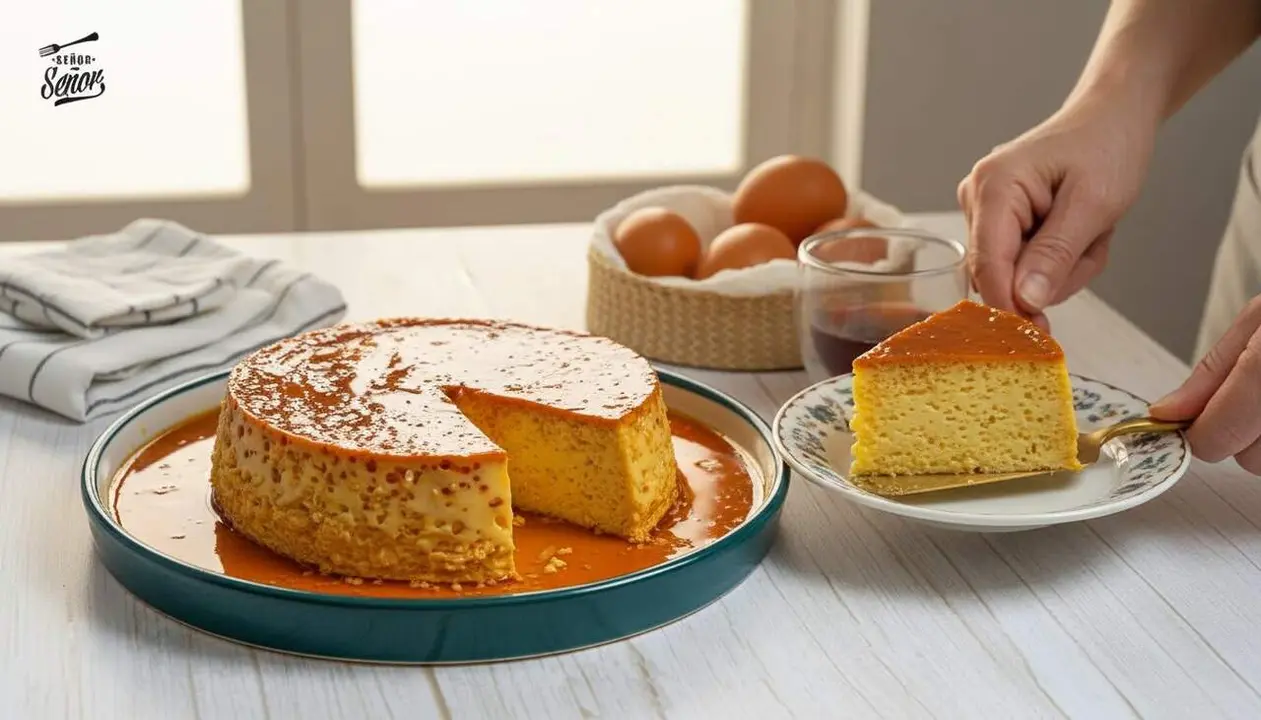

When you enter grandma’s kitchen, you often come across an egg flan that seems to hold more secrets than recipe. This dessert, with its smooth texture and shiny caramel, is the star of many family tables.
But it’s not just any flan: it’s my grandma’s egg flan, made in a flan mold that has more than 50 years of history and holds the taste of a thousand conversations and laughs at the table.
Traditional Homemade Egg Flan
⏱️ Cooking time: 1 hour in a bain-marie
🔥 Calories: approximately 250 kcal per serving
👨🍳 Difficulty: medium
The Character of Grandma’s Egg Flan
I have to confess that at first, my flan didn’t come out nearly as good as my grandma’s. The traditional recipe she used, with that golden, liquid caramel, seemed more like a challenge than a dessert. But after many attempts, I learned that the trick lies in patience and a good large flan mold, the very one my grandma used over 50 years ago.
Also, this flan was usually served with a good dollop of whipped cream, which gives it a creamy and slightly sweet touch that contrasts with the intense flavor of the caramel. The texture, smooth and silky, is what makes this classic remain a staple at the table.
Key Steps for the Perfect Flan
The process begins with the preparation of the caramel: a mixture of sugar and water cooked until it reaches a deep amber color. But beware! When adding hot water to the melted sugar, it must be done carefully to avoid splashes and burns. This caramel is immediately poured into the flan mold to let it cool while preparing the flan mixture.
In a bowl, the eggs are beaten with the sugar without aerating the mixture too much, to avoid bubbles that would break the fine texture of the flan. Next, milk and a bit of vanilla essence are added to enrich the flavor. The mixture is strained through a fine sieve before pouring it into the flan mold, ensuring there are no lumps.
Cooking and Unmolding
The Bain-Marie, the Secret to the Texture
Placing the flan mold inside a tray with hot water up to half its height is essential to cook the flan at 160°C for one hour. This ensures the flan cooks slowly, without the eggs coagulating too much and losing that very special texture we so love.
Once the time has passed, doneness is checked with a knife: if it comes out clean, the flan is ready. It should be left to cool at room temperature before being placed in the fridge, where it will rest for at least four hours. This step is vital to achieving a firm but creamy flan.
The Secrets of Unmolding
Before unmolding, run a knife around the edges to prevent sticking. This little trick allows the flan to come out of the mold without breaking, revealing that shiny caramel everyone eagerly awaits.
Serving it with homemade whipped cream or simply on its own is a pleasure that never fails. And if you’re still hungry for more traditional recipes, you can try other classics like coffee flan or nougat flan, which add a different but equally delicious touch.
More Grandma Recipes You Can’t Fail With
Essentials of Homemade Cooking
- Homemade Rosquillas: crispy on the outside, fluffy on the inside, a Sunday classic.
- Homemade Custard: the silky texture that takes you back to childhood.
- Fried Milk: that toasted delight that surprises and hooks you.
- Easter Torrijas: because the traditional sweet never fails.
Tips for Soulful Cooking
Classic dishes, like this egg flan, are more than a recipe: they are memories, shared moments, and that unmistakable flavor only grandmas know how to leave on the table.
If you enjoy cooking with simple ingredients and results that charm, this recipe is for you. And if you want to know more about basic products, I recommend discovering the current situation of eggs and how they affect homemade cooking.
The truth is that this traditional grandma’s egg flan keeps its essence and remains a symbol of home cooking, a recipe that never goes out of style and always surprises with its simplicity and flavor.