Covirán expands with 12 supermarkets and a strategy opposite to Mercadona
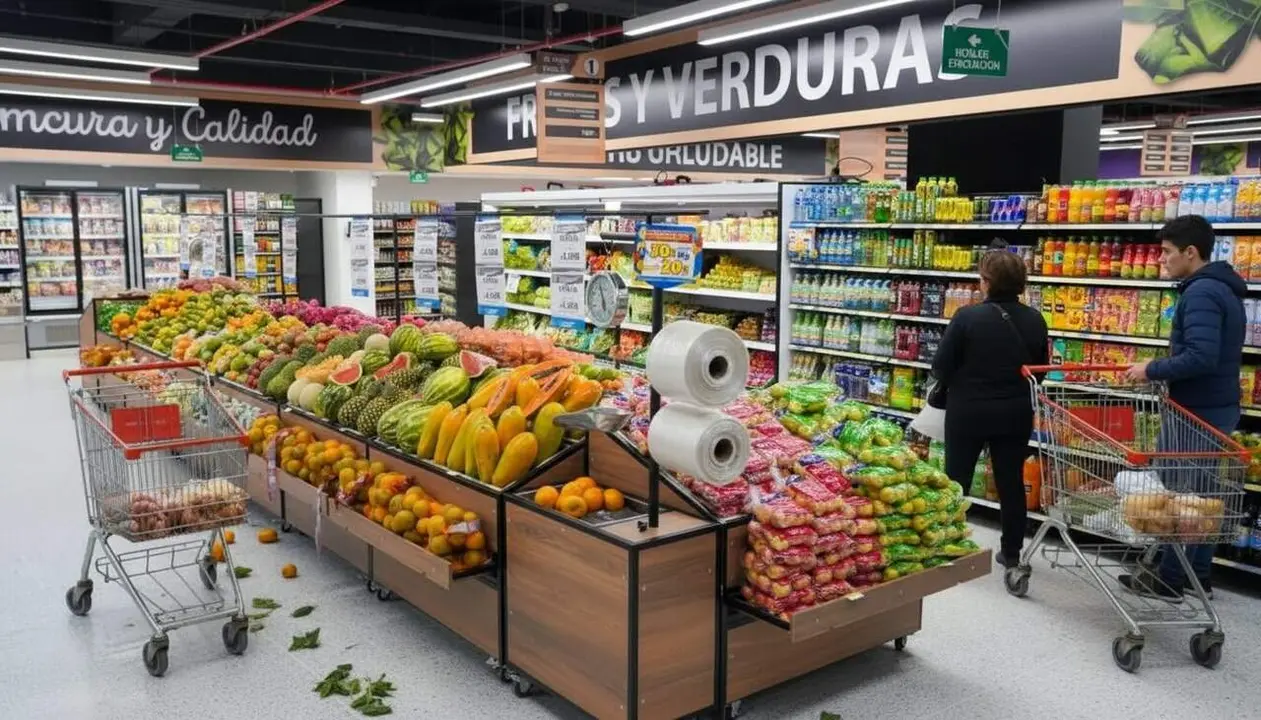

12 new Covirán stores have opened in the last month in places where the big chains hardly even stop to look. Andalusia, Catalonia, the Basque Country, and Castilla-La Mancha are the stages of this expansion that goes beyond the simple opening of supermarkets. Covirán bets on a cooperative and local model that contrasts with the strategy of giants like Mercadona, Carrefour, or Aldi.
At a time when everyone wants their share of the city, Covirán ventures into rural territories and small municipalities. 12 new stores with 2,067 additional square meters and 32 new jobs, are tangible proof that there is still room to grow without losing the essence of local commerce.
Covirán and its different approach
💶 New jobs: 32
🛒 Models: Covirán Origen and Covirán Plus
📏 Expanded area: 2,067 m²
Cooperative and local model
While Mercadona and Carrefour compete in big cities, Covirán has put on the rural superhero cape. Their secret? Collaborating with small local entrepreneurs who know their territory better than anyone. This flexibility and adaptation allows them to offer fresh products and tailor-made services where sometimes there isn’t even a pharmacy.
Esteban Gutiérrez, general director of Covirán, makes it clear: "Each new supermarket is an opportunity to create jobs, boost the local economy, and strengthen the social fabric of communities." It’s not just about selling food—it’s about building a future project.
Expansion and economic impact
This year, 12 new stores have increased the Covirán network, adding 32 jobs and significant commercial space. This move does not go unnoticed, especially in areas where the commercial offer is scarce and local commerce is key to community survival.
If you want to see how Mercadona is making its own urban move, you can read about how Mercadona opens its first "Tienda 9" in Catalonia with a team of 47 people. Two models, two philosophies.
Covirán vs Mercadona: the clash of strategies
The rural resistance
If Mercadona grows big in the city, Covirán does the opposite: betting on towns and less populated areas. This strategy is not only business-oriented but seems like a kind of silent resistance against the large superstores that have dominated the market for years.
With a network that keeps growing beyond urban centers, Covirán positions itself as the perfect ally for communities that want to maintain local commerce without having to travel 20 kilometers to the nearest city.
Collaboration and local adaptation
Covirán doesn’t just open stores; it brings in entrepreneurs and local partners who contribute unique knowledge of each neighborhood or municipality. This involvement translates into an offer that better fits the real needs of each place.
Moreover, while Mercadona bets on a more homogeneous model, Covirán shows its flexibility with formats like Covirán Origen and Covirán Plus, adapted to different types of markets and consumers. And speaking of coffees, it’s worth knowing that Mercadona will double its coffee shops by 2026, so the battle is on many fronts.
The 12 new stores and their locations
Geographical distribution
The latest Covirán openings have taken place in very diverse locations, consolidating their presence nationally but with a clear focus on less urban areas. Here is the list:
- Danman Shop (La Rinconada, Seville)
- Ramjha Santa Coloma (Sant Pere de Ribes, Barcelona)
- TR (Málaga)
- Ahmad 2023 (Barberà del Vallès, Barcelona)
- Sara Jurado Luque (Carcabuey, Córdoba)
- Zohan Meharen (La Múnia, Barcelona)
- Supermercados Budia (Budia, Guadalajara)
- Supercloud (Durango, Biscay)
- Zohan Meharen (La Ràpita, Barcelona)
- Eklas & Mohammed Minimarket Costa del Sol (Fuengirola, Málaga)
- Ruixize (Bilbao, Biscay)
- Basquesolen (Mungia, Biscay)
Local impact and future
Each store is not just a new sales area but a meeting point for the community. The impact on the local economy and employment is clear, and Covirán’s strategy seems prepared to keep growing like this, with a model where the human factor and proximity are key.
With its different approach, Covirán positions itself as a model to watch in an industry often obsessed with size and uniformity.
The reality is that Covirán is showing that there is room to grow in a more human and adapted way, and that this rural bet could turn out to be more beneficial in the long run for many communities.