Apples in Spain and Europe loaded with multiple pesticides: what’s happening?
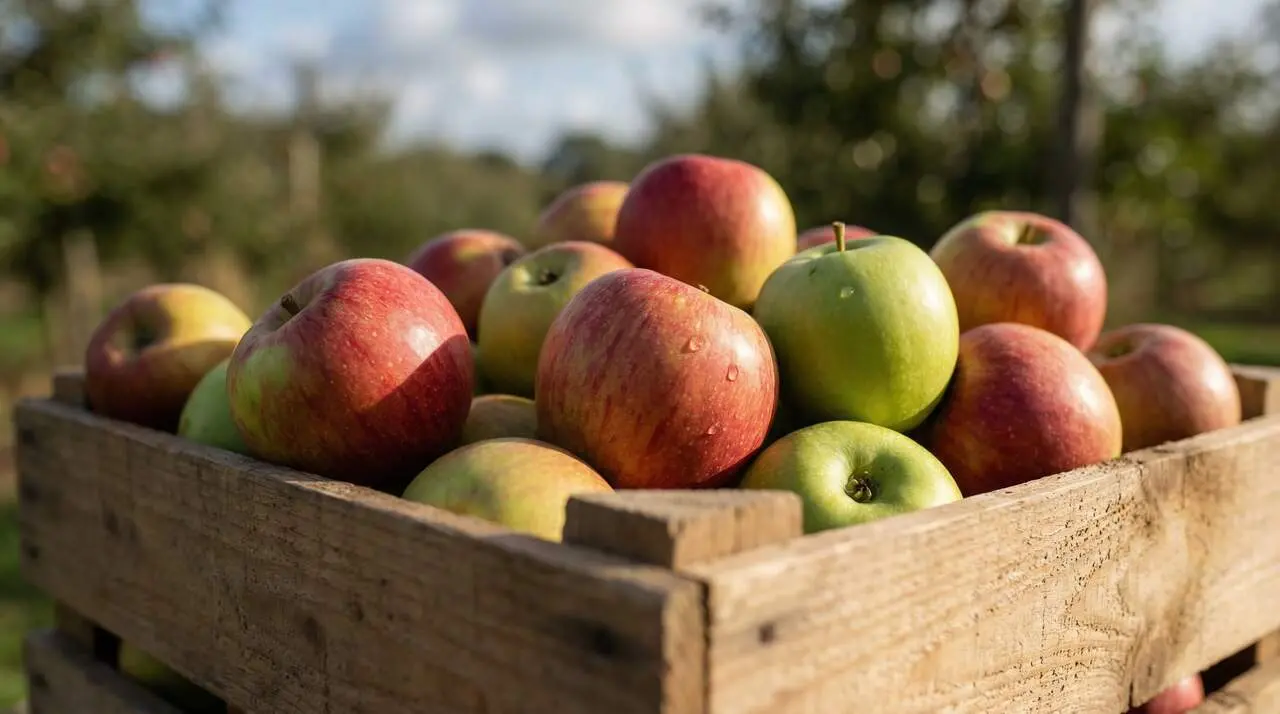

85% of apples analyzed in Europe contain residues of more than one pesticide at the same time. And we’re not talking about just a little, but an average of three, with peaks of up to seven pesticides in a single piece. The fruit we eat every day hides a chemical cocktail that raises the hairs on your neck.
Spain, France, and Italy top the list with 80% of apples contaminated with multiple pesticides. The NGO Pesticide Action Network Europe (PAN Europe) has published a recent study that makes you think twice when picking fresh fruit from the market. According to Carlos de Prada from Hogar sin Tóxicos, this highlights that institutions only measure the danger of each pesticide separately, ignoring a combined effect that may be much worse.
A European problem with multiple residues
The data you didn’t expect
59 apple samples from 13 European countries, including Spain, have been put under the microscope. The result? 93% contained at least one pesticide, while 85% carried a combo of more than one pesticide. As a striking curiosity, in Denmark only 20% had multiple residues, a figure that seems like a miracle compared to the 80% in Spain, France, and Italy.
Carlos de Prada, head of Hogar sin Tóxicos, warns that this is not just a number; it’s a chemical bomb that authorities still don’t know how to measure because they only focus on one pesticide at a time.
The most feared pesticides and their impact
71% of the apples studied carried pesticides classified as very toxic by the European Union, included among the ‘candidates for substitution.’ And it doesn’t end there: 36% contained neurotoxic pesticides, while 64% had PFAS residues, substances that are not only toxic but also extremely persistent and concerning.
If you thought this only affected adults, consider that 93% of the samples would not comply with standards if considered processed foods for babies. A clear warning for parents who want to take care of the fruit they give their children.
Recommendations and regulatory debate
The urgency of stricter legislation
Martin Dermine, executive director of PAN Europe, doesn’t hold back when he says that if the EU and national governments had properly enforced the laws, many of these pesticides would already be banned. Instead, the current omnibus proposal on food and feed seems to go in the opposite direction, weakening public health protection.
The document urges prioritizing local organic apples, where synthetic pesticides are not used, an alternative already proven that could avoid this chemical disaster.
Practical advice for consumers
- Avoid conventional apples if you want to reduce pesticide exposure.
- Prefer local organic products, which guarantee lower residue presence.
- Get informed about suppliers’ agricultural practices, especially if you have children at home.
By the way, for the curious who want to learn more about the challenges posed by the chemical cocktail effect, this study on pesticides and contaminants is a good starting point. And if you want to understand how this is managed at the European level, don’t miss the European Day dedicated to victims of this chemical issue.
Reactions and recent data
The stance of organizations
Environmental and public health organizations have emphasized the urgent need to review legislation, in light of the EU proposal that appears to relax controls. PAN Europe’s director, Martin Dermine, insists that legal measures not only need to be maintained but strengthened to protect consumers and the environment.
A study reveals that the wear of the European regulatory system is not up to the challenge, and that the European movement to review rules and alternatives is already a reality that cannot be ignored.
Data to keep in mind
| Aspect | Percentage |
|---|---|
| apples with at least one pesticide | 93% |
| apples with multiple pesticides in Spain, France, and Italy | 80% |
| apples with very toxic pesticides | 71% |
| apples with neurotoxic pesticides | 36% |
| Presence of PFAS | 64% |
| apples unsuitable for baby food | 93% |
The debate remains open because, while fruit should be an ally of health, the reality is that the presence of this chemical cocktail causes many consumers to rethink what they put on the table every day.
The reality is that, if European regulations don’t change, we will continue eating fruit with an unwanted chemical extra that no one asks for but everyone ends up consuming.