A thermal camera reveals the big difference between electric and combustion cars

It may seem like a battle of tastes or ideals among motor enthusiasts, but when a thermal camera comes into play, everything changes. Electric vehicles and traditional combustion ones show a thermal contrast that cannot be ignored, even if at first glance they seem the same.
But before explaining in detail what happens, imagine observing a car with a device that detects heat invisible to the naked eye. The scene is more surreal than you think.
How an electric car looks under a thermal camera
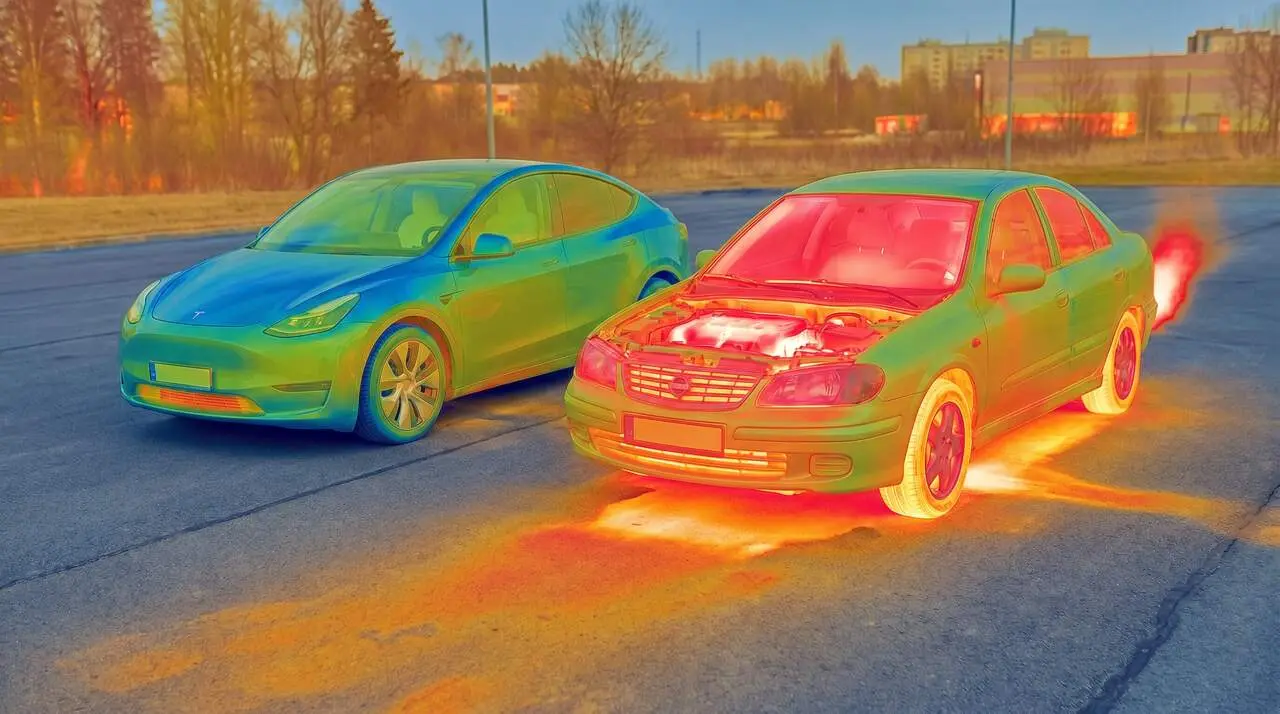
Electric cars are like that friend who doesn't heat up easily, no matter how hard you push. Without an engine burning fuel, the heat concentrates in electronic components and the wheels, but this heat is much more moderate.
Moreover, thermal energy dissipation is minimal. The hood doesn’t get very hot, and the temperature in the battery cooling areas remains well controlled. Nothing like that gasoline engine blowing flames.
Obvious thermal efficiency
The thermal camera clearly shows how less energy is lost as heat in electric cars. This cooler thermal footprint reflects better energy management and less waste. It’s not just a matter of emissions, but also of technology applied to keep the vehicle in top condition.
Specific heat zones
Instead of a central fire, the heat is localized in specific spots: the wheels and the cooling systems. This also contributes to many components of the electric car having higher durability because they are not subjected to the high temperatures of combustion.
The thermal profile of a combustion vehicle
On the other hand, cars with combustion engines are like an active volcano under the hood. The thermal camera doesn’t lie: the front explodes with intense heat, from the engine to the exhaust.
This heat is a direct result of chemical combustion and mechanical friction, which not only wastes energy but forces manufacturers to implement complex cooling systems to prevent everything from breaking down.
Heat everywhere
The thermal image of these vehicles reveals a much more extensive and intense heat distribution, especially in the zones that endure traction and the engine. This wasted energy is literally heat lost to the environment.
Practical consequences
This excess heat not only entails more consumption and emissions but also affects the lifespan of parts, which must be protected against these thermal peaks. Thus, components in combustion cars tend to have lower durability compared to electric ones.
Why does this difference matter?
A question of efficiency and future
Images captured with thermal cameras are not just a visual spectacle but tangible proof of how electric technology better manages energy. Less heat means fewer losses and more performance.
Experts’ opinions
According to a spokesperson for FLIR Systems (specialists in infrared cameras), this thermal difference “clearly reflects the superiority of electric systems in terms of energy efficiency and sustainability.” An independent mechanic in Barcelona points out that “the reduction of thermal stress on components is key to the long-term reliability of electric vehicles.”
This thermal evidence is a mirror of reality: electric cars are not only quieter but also manage heat much more intelligently, which directly impacts their efficiency and maintenance.
And if you still have doubts, now you have an invisible ally that confirms it with images and data, making it clear that the future is not only clean but also much cooler.