The president of Toyota does not abandon hybrids: preparing good electric cars
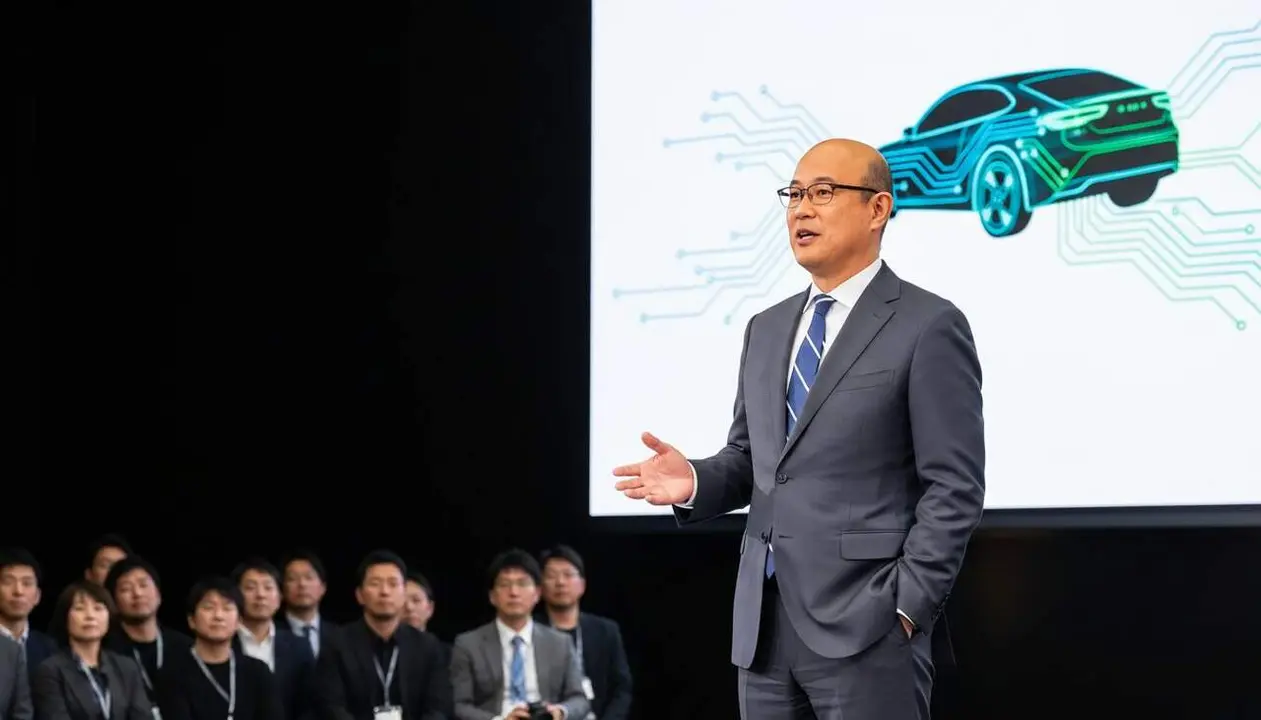

There are brands that think the key is a single technology. Toyota is not one of them. Although many rivals bet everything on the electric car, Toyota has maintained its commitment to hybrids, plug-in hybrids, hydrogen, and other options. This strategy, which some have considered too conservative, has allowed it to hold up better in a market full of uncertainties and constant changes.
The president and CEO, Kenta Kon, expressed an idea that says it all: "If our customers want electric, we will deliver good electric cars." A phrase that is not just a promise, but a warning that Toyota will not simply follow the trend, but will manufacture electric cars when it believes it can do so with quality and competitiveness.
Toyota does not give up hybrids, but prepares for the electric future
📈 Battery electric growth forecast 2027: 598,000 units
🏛️ CEO: Kenta Kon
📅 President since: April 2026
A multi-technology strategy in an uneven market
The global automotive market is fragmented: not all countries are ready for total electrification, and not all customers have the same needs or possibilities. Toyota has been betting on self-charging hybrid technology for over two decades, which gives it a clear advantage in markets where charging infrastructure is still unreliable.
This diversity of technologies also includes plug-in hybrids, battery vehicles, and hydrogen models, adapting the offering according to territory and consumer. This flexibility prevents Toyota from being sidelined in key areas like Europe, China, or North America.
Sales and confidence in hybridization
In 2025 Toyota and Lexus surpassed for the first time 5 million electrified vehicles sold, with 4.62 million conventional hybrid units. Plug-in hybrids and battery electrics still represent a smaller part, but with a tendency to grow rapidly.
The forecast for 2027 speaks of a spectacular increase to nearly 600,000 battery electric vehicles, practically doubling current figures. This makes it clear that Toyota is accelerating without giving up its prudence and experience.
The challenge of adapting Toyota’s identity to the electric car
Quality, reliability, and user experience
The new challenge for Toyota is to demonstrate that it can transfer its traditional values to the electric car: reliability, efficiency, durability, and practicality. It is not just about putting a big battery, but creating a driving and charging experience that does not disappoint its loyal customer.
Software management, battery cooling, aerodynamics, and the charging network are key factors to achieve this goal. Toyota plays at another level, where it is not enough to offer a product that is only electric, but one that is a Toyota with all the letters.
Europe, a key testing ground
Europe is one of the most demanding areas and a good barometer for Toyota in this process. With models like the updated bZ4X, the C-HR+, and the electric Urban Cruiser, the brand wants to secure a good share in a market where customers are already familiar with electrification, but especially with the hybrid formula.
Convincing these customers to make the jump to 100% electric, without losing the feeling of reliability and rationality, will be one of the big challenges in the coming years.
What does the future mean for Toyota and its customers?
Towards a more flexible transition
Kenta Kon’s message is clear: Toyota does not see the electric car as the only path nor the magic solution. It prefers an adapted, slower but safer approach, where the energy transition is viable for everyone and leaves no one behind.
This implies maintaining hybrid sales as long as there is demand, developing electric cars where necessary, and exploring other alternatives such as hydrogen or carbon-neutral fuels.
A Japanese bet to not break what works
Instead of radical bets and spectacular announcements, Toyota advances slowly, ensuring that the trust built over decades is not broken. It is a less spectacular strategy, but perhaps wiser in a market full of uncertainties and unexpected twists.
Kenta Kon and Toyota prove once again that the best way to move forward is to do so without rushing or losing essence.
The reality is that Toyota wants to be a strong player in the mobility of the future, but in its own way: without giving up hybrids, and delivering electrics when customers ask for them, but always offering the quality and reliability that its followers expect.