The end of an era: Tesla leaves behind its first two icons

There are cars capable of changing the course of automotive history. And then there are cars that simply become legends. The Tesla Model S is one of those cases. When it appeared over a decade ago, it proved that an electric car could be elegant, powerful, and practical all at once, without sacrificing anything other than the engine noise.
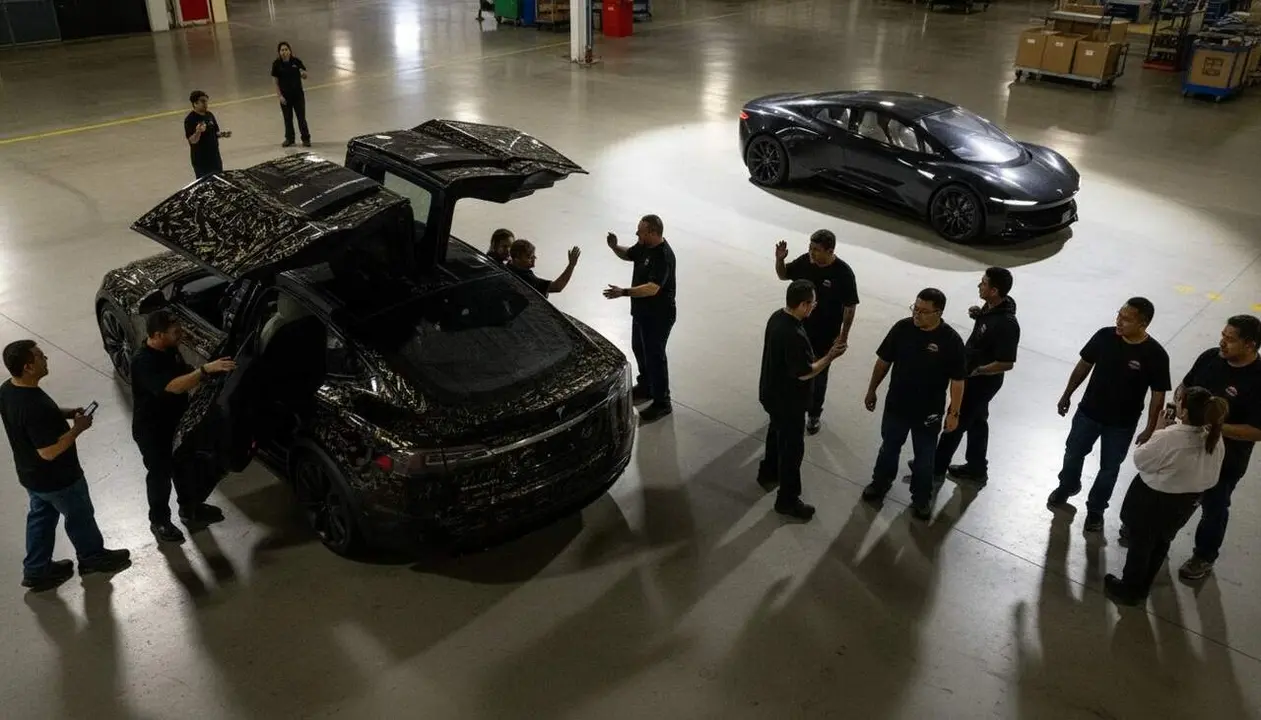
But now, the Model S and its extravagant sibling, the Model X with its falcon-wing doors, have reached their final miles of production at the Fremont factory. And it’s not a silent or discreet farewell, but rather a full-circle closure that has been celebrated (with some nostalgia) by the workers who brought these iconic vehicles to life.
The Model S and Model X, the chapter Tesla writes anew
The story was written 14 years ago, when the Model S began production. A vehicle that was not only Tesla’s first major success but also raised an uncomfortable question for traditional manufacturers: why would we choose a combustion car when you can have an electric one that does all that and more?
The Model X joined the lineup in 2015, bringing an SUV with a touch of science fiction thanks to its uniquely exaggerated doors. Both models have been Tesla’s crown jewels, but, against all odds, their sales have dropped to almost anecdotal levels in the past year.
The numbers behind the withdrawal
In 2025, Tesla only sold 50,850 units of these models along with the Cybertruck. To put it in perspective, the brand sold over 1.6 million vehicles between the Model 3 and Model Y, its current two stars. The annual production capacity at the Fremont complex was 100,000 units for the Model S and Model X, but demand has not justified these numbers in recent years.
Faced with this reality, Tesla has opted to focus exclusively on these two best-sellers, leaving behind production of its first big hits as a symbol of a new, more efficient and focused stage.
Nostalgia and a stylish goodbye
To bid farewell to these models, Tesla has launched a special Signature edition, limited to only 350 units (250 Model S and 100 Model X), priced at $159,420 each. This exclusive collection was not available to the public but reserved for the most select owners, which will only increase the value of these cars over time.
The last Model S produced, a black car signed by the entire factory team, will remain as a museum piece, a living memory of an era that is now part of electric car history.
The legacy of the Model S and Model X in the industry
When Tesla changed the rules
Those who remember the Model S cannot help but think about the revolution it represented. It was not only an electric car but the first to convince that this kind of vehicle could compete in performance and range with any combustion one. Moreover, its capacity for long trips broke stigmas and opened the door to a rapidly growing market.
The Model X, for its part, made it clear that extravagance and innovation are compatible with functionality. The falcon wings, more than just a visual trick, were the best way to say “here is the future.”
The drop in demand and the new focus
In recent years, demand for these premium models has collapsed. Tesla has been selling fewer units, and production has dropped to levels that made keeping the lines active unviable. This happened just as other more affordable and popular models, like the Model 3 and Model Y, dominated the market.
The decision to withdraw them comes as no surprise, but it leaves a void that will only be filled with new launches. Musk and Tesla keep their focus on a hypothetical affordable Model 2 and on the new generation of the Roadster, yet to be seen.
Where is Tesla heading after goodbye?
The immediate future without clear successors
The Model S and Model X leave without a clear successor in sight. The Fremont factory has been emptied of these vehicles, preparing for a new scenario where only the most popular and profitable models gain prominence.
The modern Roadster, which has suffered constant delays for almost a decade, is the only visible hope to offer a new alternative for the high-end range, but it is still far from reality.
The uncertainty of the Model 2 and the new Tesla era
The much-rumored Tesla Model 2, a vehicle initially expected to be priced around $25,000, has gone through all possible phases: from being announced as imminent to being discarded by the company. Elon Musk himself has called its production “nonsense” at certain times, leaving the future of this entry-level model up in the air.
Meanwhile, Tesla bets on further boosting production of the Model 3 and Model Y, which are the brand’s real workhorses, while its former flagships remain in memory as irreplaceable pioneers.
The reality is that the end of the Model S and Model X closes a crucial chapter in Tesla’s history; a chapter that marked the industry’s step toward massive electrification before making way for the next revolution.