Fines of up to €600 and loss of points for speeding in the city

The story begins five years ago, when Spain became the first country in the world to implement a 30 km/h speed limit on single-lane urban roads in each direction. This milestone has caused real changes in road safety, but it has also tested the patience of the most impatient drivers.
Since then, fatal victims in these environments have decreased noticeably, with a 19% decline among cyclists and more than 16% among pedestrians. But the DGT has not remained idle and has tightened penalties for those who speed.
Penalties that leave no room for error
Fines and point deductions depending on speed
The DGT has made it clear that exceeding the 30 km/h limit in the city is no joke. According to Multalia, violations can be serious or very serious, with fines ranging from 100 to 600 euros and the withdrawal of up to six points from the license.
For example, driving over 80 km/h in a section limited to 30 km/h means the maximum fine and the harshest point deduction. That is, exceeding the limit by more than 50 km/h is synonymous with severe punishment.
Who is most affected?
Although accidents have generally decreased, the age group between 15 and 24 years has experienced a 3% increase in fatal victims. Curiously, the range between 35 and 44 years is the one that has seen the largest reduction, at 42%.
These data provide an interesting perspective on how the rules are (or are not) followed in the city.
Impact on Spain’s largest cities
Cities with fewer accidents
More than 4 out of 10 cities with over 100,000 inhabitants have reduced urban accidents. Cities such as Bilbao, Madrid, Barcelona, and València are part of this group, where coexistence with cyclists and scooters is increasingly common.
In fact, nine municipalities, including Alcobendas and Leganés, have recorded no fatalities in 2024, a figure that continues to surprise.
Factors influencing the reduction
The DGT highlights that speed reduction is key to decreasing the severity of accidents. The World Health Organization points out that at 50 km/h the probability of dying in an accident is 80%, while at 30 km/h it drops to 10%.
Moreover, the growing presence of personal mobility vehicles (PMVs) forces all users to share space with more care and responsibility.
The new reality for drivers and scooter users
Strengthening regulations for PMVs
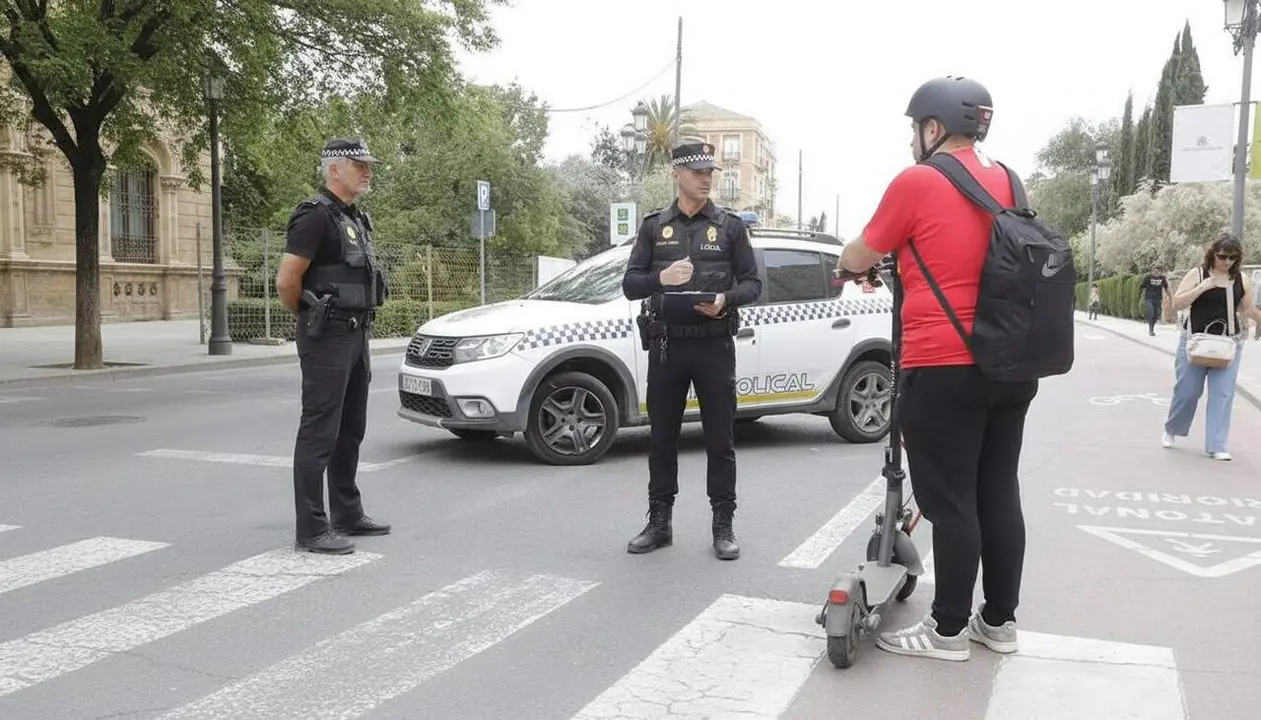
The DGT does not only focus on cars; users of electric scooters and other PMVs have seen regulations tightened. Limits and penalties apply not just to automobiles, but to everyone circulating in the city.
Safety and coexistence depend on adapting to the rules, something that is not always welcomed but is necessary.
What does this mean for you?
If you are a driver, cyclist, or scooter user, it is worth remembering that exceeding the 30 km/h limit can be very costly. It’s not just about fines, but points that can leave you sidelined and, above all, about people’s lives.
The DGT wants to restore order and seems to do so with a firm hand, because safety should not be taken lightly.
The reality is that economic and point penalties for speeding in the city are already a tangible fact that has changed the way we move. And it’s not just out of fear, but to make cities a safer place for everyone.