Starting in July, there will be cars with breathalyzer pre-installation

Have you ever noticed how the European Union seems obsessed with adding more devices to cars? This July, it steps up a notch: all new vehicles will have to come with a pre-installation for a breathalyzer ignition interlock, better known as an alcolock. This is no joke or futuristic gadget, but a measure that pushes safety into new territory.
But don’t worry, it’s not like all cars will have the alcolock installed by tomorrow; not yet. What will happen is that starting July 7, 2026, any car leaving the factory in the European Union will have to have the interface ready for this system. A small but significant difference that opens the door to spreading this technology across the entire fleet more easily.
A leap in safety with the breathalyzer ignition interlock
Alcolocks are not new for passenger transport vehicles, mandatory since 2022. But now the European Union takes a step further with the mandatory pre-installation for all new cars, including passenger cars. This means any vehicle leaving the factory will have the system ready to install a breathalyzer that prevents ignition if the driver exceeds the legal alcohol limit.
Although currently the use of this system is limited to repeat offenders in countries like Spain or Italy, or widespread in others like Finland, France, and Sweden, this change suggests its use could expand much more. And that could change the way many people drive, for better or worse.
How does the alcolock work?
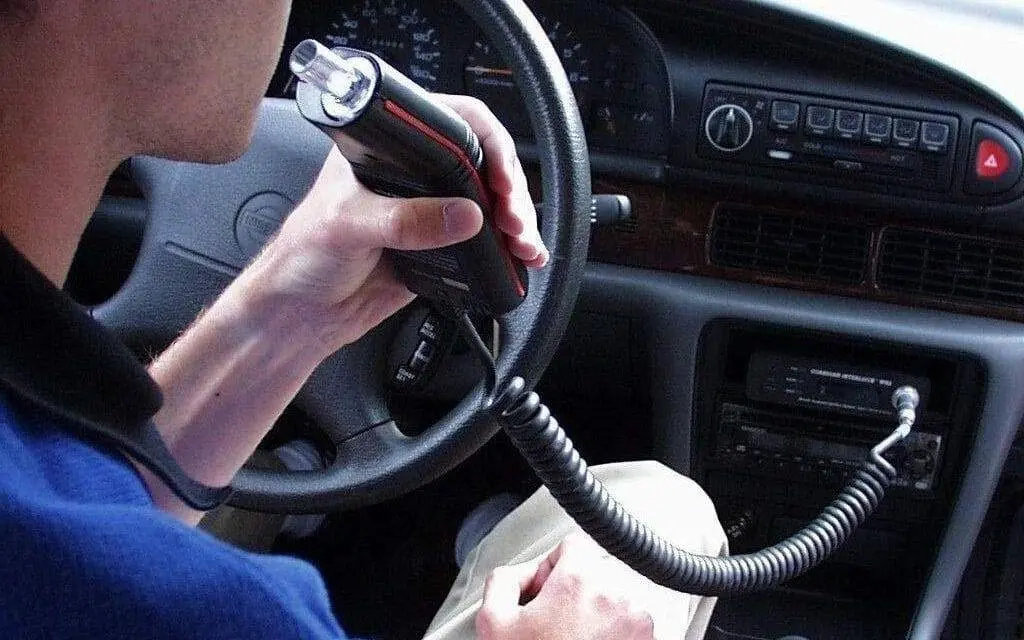
It’s simple: the driver has to blow into a device connected to the ignition system. If the alcohol level is above the allowed limit, the car simply won’t start. A mechanism that can prevent tragedies and will now be much more accessible because all new cars will be able to easily incorporate it.
What does this pre-installation mean?
Until now, vehicles only had a generic interface for the alcolock in case national legislation required it. With this change, this equipment will be part of the standard fitment of any car leaving the EU factory. It’s a way to standardize and facilitate the implementation of the technology without having to modify the vehicle later.
Other technological advances: black box and improved assistants
But it doesn’t end there. The EU has also adjusted other technologies affecting road safety. For example, the vehicle black box, which will now record not only accident data but also pollutant emissions, will be mandatory for all new cars, trucks, and buses.
Additionally, driver assistance systems must improve detection of cyclists and pedestrians, and the driver fatigue detector will be updated to better capture their condition in real time. The intelligent speed assistant (ISA) also becomes more precise in reading traffic signs.
What does the improved black box bring?
The new black box will not only collect data in case of an accident but also monitor emissions. This represents a quality leap in environmental control and risk prevention. It’s a device that can help researchers and authorities understand what happened just before a collision and assess the real impact of vehicles on the environment.
Assistants that watch more closely
Assistance systems now have more advanced sensors to detect cyclists, pedestrians, and even driver fatigue. It’s as if the car had extra eyes that never get tired. This allows for safer driving, although, as always, nothing replaces human attention.
Implications for drivers and manufacturers
Manufacturers will have to adapt their production lines to include this mandatory pre-installation—a cost that will likely be passed on to the end consumer. But not only that: drivers will face a new reality where the breathalyzer could become widespread in just a few years.
For their part, the Directorate-General for Traffic (DGT) and similar authorities in the EU see these changes as a way to reduce accidents, especially those caused by alcohol. According to official sources, these measures could save many lives and prevent license points lost due to excessive drinking.
What could happen with repeat offenders?
Drivers who have been sanctioned for driving under the influence already know the alcolock is a measure to regain trust on the roads. Now, with the general pre-installation, this system could become common for more people, not just repeat offenders.
How will this affect the automotive industry?
Manufacturers will have to get moving to make this pre-installation effective and compatible with all models. It could also be a boost for new technologies and innovations related to preventing alcohol-related accidents—a pending issue in many countries.
The reality is that starting July 7, 2026, the European Union takes a firmer step in the fight against drunk driving. Whether you like it or not, the cars of tomorrow will already be ready to say no to those who break the limits. And that, whether by control or safety, will change how we understand mobility.