Norway records a historic record with 98.6% electric cars

Who would have thought that a country with roads sometimes as quiet as a Sunday afternoon could lead such a radical change? Norway, with its mountains and fjords, is leaving combustion engines behind like taking off uncomfortable shoes after a long day.
But it’s not just a local anecdote: this April, almost everything registered there was an electric car. And they did it in a market that, in fact, fell slightly. Surprising, right?
Norway and the 98.6% record in electric cars
The data doesn’t lie: Norway registered 10,952 electric cars out of 11,103 new vehicles during April, leaving the market share of electrics at a spectacular 98.6%. Right now, it seems the transition to zero-emission mobility is almost complete in this Nordic country.
This figure not only confirms a trend seen for years, but also places Norway as the first country to almost fully total new car sales with 100% electric vehicles. This, while in other European countries, including Spain, where 106,862 cars were sold in the same month, the electric share is still far from these percentages.
The models dominating the Norwegian market
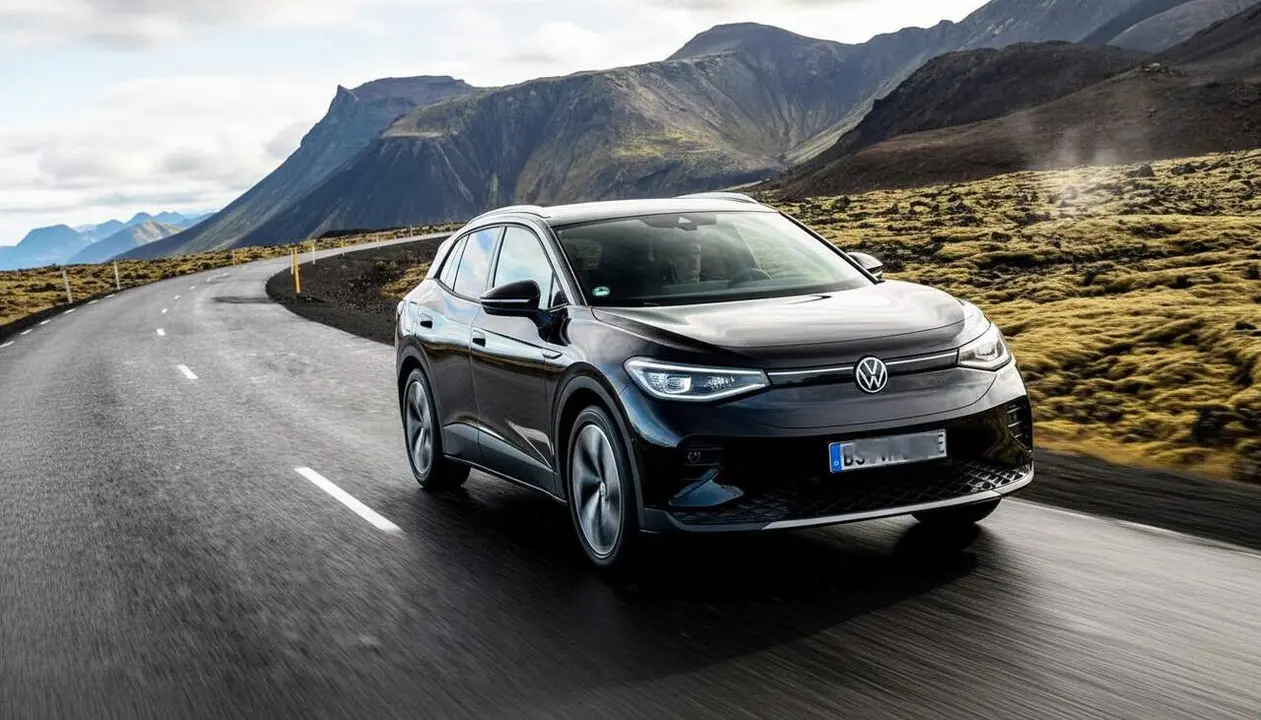
The Volkswagen ID.4 was the king of sales in April with 781 units, followed by the Toyota Urban Cruiser with 583 registrations and the Volkswagen ID.3 with 543 vehicles. The list doesn’t end here: BMW iX3, Toyota bZ4X, Skoda Enyaq, Tesla Model Y, and Ford Explorer also had a prominent presence, a real festival of well-varied electric models.
For the yearly total, Tesla clearly leads with 5,652 Model Y and 2,062 Model 3 sold, while Toyota bZ4X, VW ID.4, and Volvo EX40 also set a trend.
The total market falls, but electrics rise like foam
Curious but true: despite the Norwegian market overall experiencing a slight drop of 1.6% compared to the previous year, electric car registrations grew by 1.7% year-on-year. This makes the market share of electrics continue to increase, showing that their appeal doesn’t cool down even with a general contraction.
On the contrary, the presence of combustion cars has almost disappeared: diesels represented a tiny 0.78% and gasoline even less, a ridiculous 0.28%. Plug-in hybrids, which many see as a transitional technology, only reached 0.18%. Norwegians seem to have little patience for long transitions.
How was this situation reached?
Norway has not arrived here by chance. For years it has applied decisive public policies to promote electric mobility: from tax incentives and exemptions to advantages in tolls and preferential access to certain services. This combo has accelerated the adoption of electric vehicles to almost unheard-of levels.
The director of OFV, Geir Inge Stokke, made it clear: "With more than 95% of new cars electric in all counties, there is no doubt that most Norwegians bet on an electric vehicle. Price, technology, and availability are key. It’s excellent news for the climate and road safety."
What does this mean for the rest of Europe?
If Norway is the example to follow, it’s clear that the path to sustainable mobility is possible. But it’s not that simple for countries with larger markets and less prepared infrastructures. Moreover, Norway’s market strength is helped by a social and political fabric that has firmly committed to electric.
The reality is that while Norway moves at Ferrari pace, other countries are still driving their fifteen-year-old Seat Ibiza. But at least we already know where we want to go. And that’s a lot.
To finish, we just have to observe how the trend remains clear: electric cars are not a passing fad, but the future that has already arrived. And Norway already lives practically all of it.