BOE formalizes the farewell to cyclists on the roadside of roads
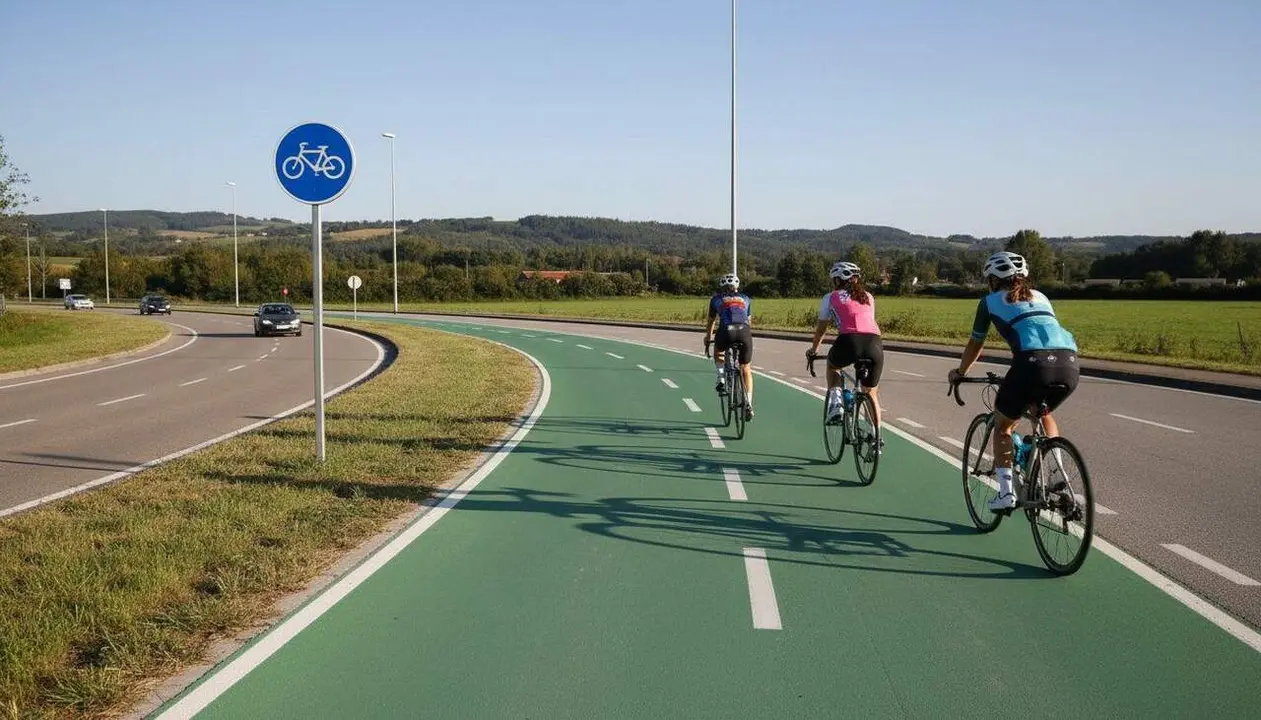

On weekends, state roads fill up with those brave cycling enthusiasts seeking healthy mobility and the outdoors. But the reality is that riding on the roadways or shoulders often feels more like playing Russian roulette, with motorized vehicles that do not always respect cyclists.
The General Directorate of Traffic (DGT) has long been racking its brain to improve road safety, but in 2024, 46 cyclists died in Spain, according to official data. Of these, 14 were without helmets in the city and a large part on interurban roads, where helmets are mandatory.
The new DGT regulation and the Official State Gazette (BOE)
Since October 10, 2025, the BOE has made official a change that will cause cyclists to stop using the shoulders of state roads. The new regulation allows the construction of segregated bike lanes, even partially or totally removing these shoulders, provided that the safety and functioning of the road are not compromised.
This is not just a rule change, but a shift in philosophy that could lead us to a continuous, safe, and connected cycling network throughout Spain, according to the State Strategy for the Bicycle and Safe, Sustainable, and Connected Mobility 2030.
What does it mean for cyclists?
- Obligation to ride on the right shoulder when it is passable, but this shoulder may disappear if a segregated bike lane is installed.
- On roads, cyclists will be able to continue riding side by side, but with more restrictions in sections with low visibility.
- In cities, they must follow rules such as riding as close as possible to the right side and only riding two abreast in groups.
Increased controls and safety measures
With the new regulation, the DGT intensifies controls to ensure the safety of all users. Ninety percent of serious accidents involving cyclists are related to motorized vehicles, so these measures are not arbitrary: they are necessary.
From shoulder to bike lane: what changes?
This measure is not only a “goodbye” to shoulders but a “hello” to segregated bike lanes that will allow safer and smoother mobility. The state will be able to invest in infrastructure that connects existing cycling routes, avoiding dangerous sections or discontinuities that have until now been a headache for cyclists.
This represents a change in how we understand bicycle circulation on interurban roads, all within a context where bicycle use is growing and accident rates must be reduced.
National strategies serving the cyclist
The State Strategy for the Bicycle and the Strategy for Safe, Sustainable, and Connected Mobility 2030 are the framework driving these reforms. The new regulation seeks to make bicycle trips safer and better connected.
The figures that don’t lie
| 2024 Data (DGT) | Number |
|---|---|
| Cyclists killed in accidents in Spain | 46 |
| Cyclists killed without helmets in urban areas | 14 |
| Percentage of serious accidents involving motorized vehicles | 90% |
How to ride under the new regulation
In the city
- Bicycles must ride as close as possible to the right side of the road.
- Maintain a safe distance from parked vehicles and curbs.
- In groups, a maximum of two side by side.
On the road
- Ride on the right shoulder, as long as it is passable (this will change in some sections for bike lanes).
- Possible abandonment of the shoulder on long descents, if it is safe.
- Riding side by side only at the far right, with restrictions in low-visibility areas.
- In congested areas, cyclists must ride in single file.
With this new regulation, the DGT not only regulates but wants to put an end to cyclists’ insecurity on shoulders to move towards more orderly and protected mobility.
Controls will increase, and the construction of bike lanes will cause the bicycle to cease to be an intruder on the road and become a safer and more recognized protagonist.
The reality is that, from now on, we will have to adapt to a road where cyclists have their own defined space, with the intention of reducing accidents and prioritizing sustainable mobility.