The DGT will ban cyclists from the shoulder: segregated bike lanes are coming
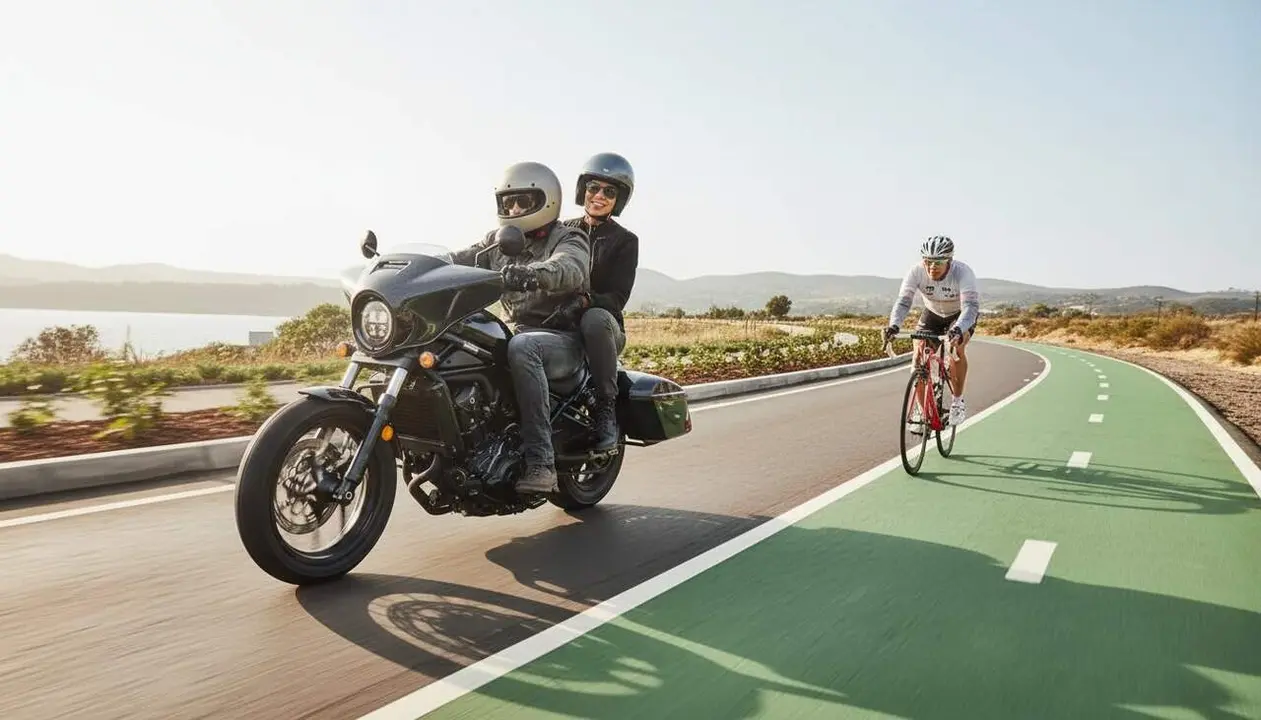

When you think about going out on your road bike, you surely imagine riding on the shoulder, that space that seems made for emergencies but everyone ends up occupying. Well, the DGT is about to change the rules of the game, and it’s no small thing: the days of bikes being mere guests on the shoulder are over.
In fact, the new Royal Decree 899/2025 that the DGT published in the BOE just a few months ago proposes a reform that could eliminate shoulders for cyclists on many roads. But beware, this is not just a change of signs: it will affect groups, drivers, and the very configuration of the road.
New legal framework: prohibition of cyclists on the shoulder and segregated bike lanes
Royal Decree 899/2025 has introduced a measure that changes the usual landscape: cyclists will no longer be allowed to use the shoulder on many state roads. This decision goes beyond a simple recommendation; it brings to the table the creation of segregated bike lanes that will take up part of the space currently allocated to the shoulder.
These protected bike lanes will not be just painted on the ground: the reform foresees that on certain conventional roads with moderate traffic the shoulders will be reduced or disappear to give way to exclusive lanes for bicycles, physically separated from other vehicles.
How will it be decided where it applies?
Until now, the rule has barely come into effect on the road, since any intervention will have to have a binding technical report from the Ministry of Transport and Sustainable Mobility. This means that bureaucracy is a clear obstacle before we see physical bike lanes where shoulders used to be.
The text makes it clear that road safety cannot be compromised, which means that the functionality of the road must also remain intact despite the redistribution of space.
Which roads will be affected?
Mainly, these are conventional roads and state roads with several lanes and moderate traffic intensity. This means the measure is not a general rule for all roads, but a pilot project that could be extended depending on its effectiveness and acceptance.
Current regulations and exceptions for cyclists on the shoulder
Despite the reform, current regulations still require cyclists to ride on the right side of the carriageway, preferably on the shoulder when it is practical and safe. If the shoulder does not exist or is in poor condition, they may occupy the necessary part of the carriageway.
Additionally, the regulation contemplates exceptions for situations such as descents with long curves, where temporarily leaving the shoulder is safer for cyclists.
The DGT and fines: what changes?
With the new regulation, the DGT plans to impose specific fines on cyclists who violate the prohibition of riding on the shoulder in areas where segregated bike lanes already exist. This represents a radical change in how cyclist circulation on the road will be controlled.
For now, there are no official figures on the number of expected sanctions, but the intention is clear: to promote physical separation to improve safety.
Reactions and social debate
Bicycle users express concerns about the quality and safety of these segregated bike lanes, fearing that some designs may be insufficient or impractical. Conversely, driver associations fear that the reduction of lateral space will affect the safety of motor vehicles, especially on roads with limited room for action.
Thus, the debate is on, and the practical implementation still hides many questions.
Perspectives and the future of bike lanes in Spain
The reform of the General Road Traffic Regulations opens the door to a profound transformation in how roads are shared between cyclists, motorcycles, and cars. Segregated bike lanes could become the norm, but for now everything is in the analysis and pilot project phase.
The challenge will be to find the perfect balance between road safety, functionality, and comfort for all users, something that does not seem simple by any means.
What to expect in the short term?
Pending technical reports and bureaucratic complexity will make implementation slow. Nonetheless, the trend is clear: the DGT wants to bet on separating cycling and motorized traffic.
Impact on coexistence on the road
If segregated bike lanes are deployed, the usual conflict between cyclists and vehicles on the shoulder could disappear, reducing accidents and points of tension. But if the infrastructure is not optimal? Maybe we will talk about it again in a few years, with more cyclists and less space.
The reality is that the DGT has focused on a long-pending issue, and now it’s time to see how the board moves.
With the prohibition of cyclists on the shoulder and the arrival of segregated bike lanes, the Spanish road could begin to look like a different scenario. Hopefully, it will be to improve safety and not to complicate it even more.