Seeing death and loving life: the brutal secret of Empar Moliner
Empar Moliner reveals how the proximity of death makes one love life. Discover her new novel and her irreverent perspective.
Seeing death up close makes you love life in a brutal way. This is the direct and raw confession of Empar Moliner, journalist and writer who makes no concessions when talking about what really matters. But, what happens when the end is near and you have to keep living?
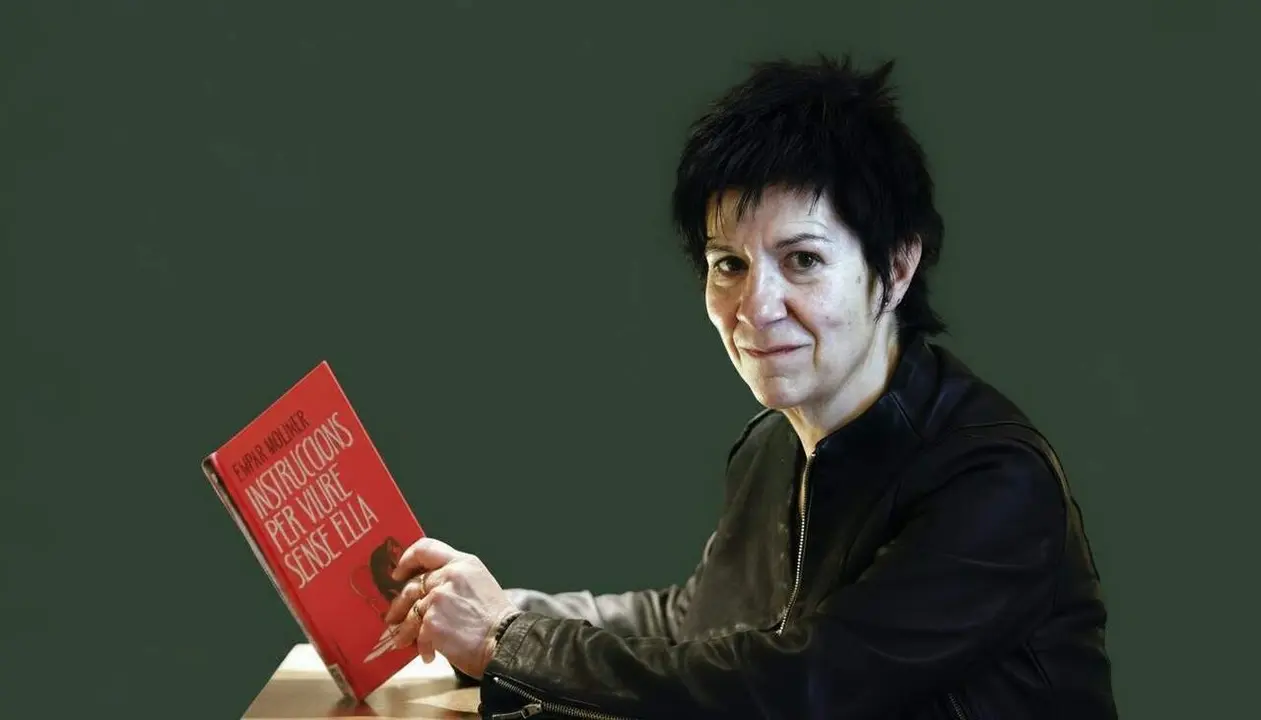

Empar Moliner is back with a novel that is almost a sarcastic and tender manifesto at the same time. "Instructions for Living Without Her" is not just a title, it is a cry, a codex for surviving absence and the passion for life that goes on, even if brutally.

The Celebration of Living and the Proximity of Death
An Unfiltered Look at the Human Experience
Moliner does not hide her irony nor her precision when she sketches the final chapter of a writer who knows she has little time left. Her novel, set in the routine of a daily journalist — a direct reflection of her own experience at Ara — tackles death with a tragicomedy that swings between sarcasm and desperate love.
But what really captivates is not the drama or fatality, but the way the protagonist learns to love life, even if it is with the brutal force imposed by the awareness of the end. What a celebration life is, they say, despite everything.
The Local Context and Dialogue with the Reader
Among the readers of Tarragona, where daily life blends with history and modernity, this message resonates with a community that knows well the value of time and the weight of memory. The novel is an invitation not to waste time on trivialities, to live each moment intensely, to make time an ally and not an enemy.
Empar reminds us that, even in crisis — whether it be a family crisis or that of the written press — there is an urgent need for love and care.

The Crisis of the Press and the Irony of Column Writing
From Paper to Screen, a Battle with Humor and Realism
The book does not escape the reality of the written press, something that in Tarragona, with its local newspapers and journalistic tradition, is experienced with some disenchantment. Moliner confesses that, despite her initial promise never to read without paper, she now embraces the duality: analog and digital.
This duality is a metaphor for her life and work: adaptation, resistance, and irony in the face of change, but with nostalgia intact. Her writing, they say, is a tribute to column writing, that art of turning daily denunciation and reflection into an act of cultural resistance.
The Role of Family and the Cost of Caregiving
Beyond the journalistic world, the novel puts family crisis front and center, the wear and tear of relationships that death and illness can bring. Moliner does not sugarcoat anything: she talks about the cost of caregiving and love when time is running out. And she does so with prose that leaves no room to breathe, that traps and ultimately makes one think.
It is a perspective that not only affects the protagonist writer but can be transferred to any household, where family networks are deep and complex.
Seeing Death to Love Life: Empar Moliner’s Philosophy
An Urge to Live More Intensely
Seeing death close is not a punishment, but a driver to love life with an intensity many ignore. Moliner says it clearly: "Don’t waste time, please. What a celebration life is!"
This statement is almost a moral imperative for a society often caught in unsubstantial distractions. Here, where culture and history invite personal examination, this message is a jolt that leaves no one indifferent.
The Value of Art and the Word Against Absence
Empar Moliner’s work is, ultimately, an act of resistance against oblivion and disappearance. Through the word, irony, and tragicomedy, she recovers life and love, even while confronting death. This is culture of thought in its purest form: a conversation with reality without useless embellishments.
But, look at that, it is not just literature: it is an invitation to rethink how we live and how we relate to what we know will inevitably come.
In the end, after reading Moliner, one is left with a clear feeling: life is brutal and precious, and it deserves the greatest celebration.