The curious and fabulous Kafkaesque vision of Quixote
A few days ago, on April 22, it was 410 years since the death of Miguel de Cervantes, and that is why these days it is interesting to bring up a topic about a curious vision of the most famous and beloved work, Don Quixote de la Mancha.
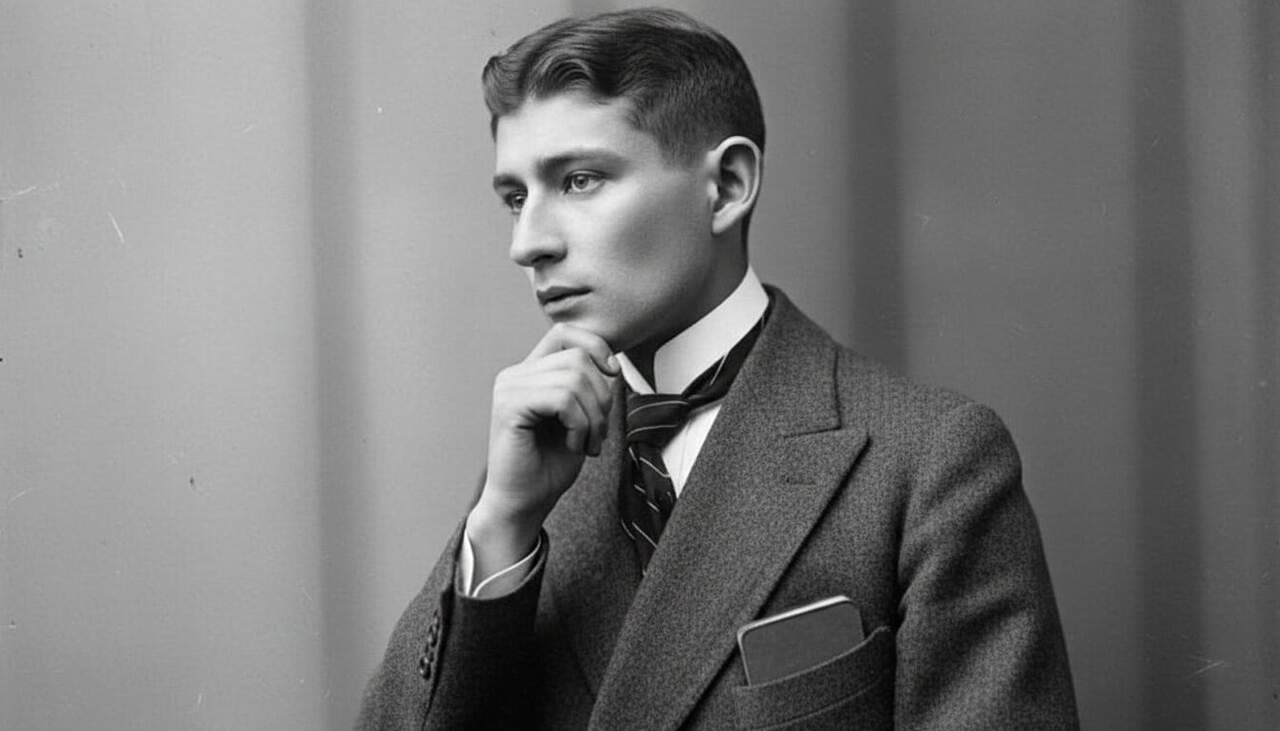
The Czech writer Franz Kafka (1883-1924) also saw Don Quixote's misfortune in Sancho Panza. Discover the critical and ironic vision of this theory.
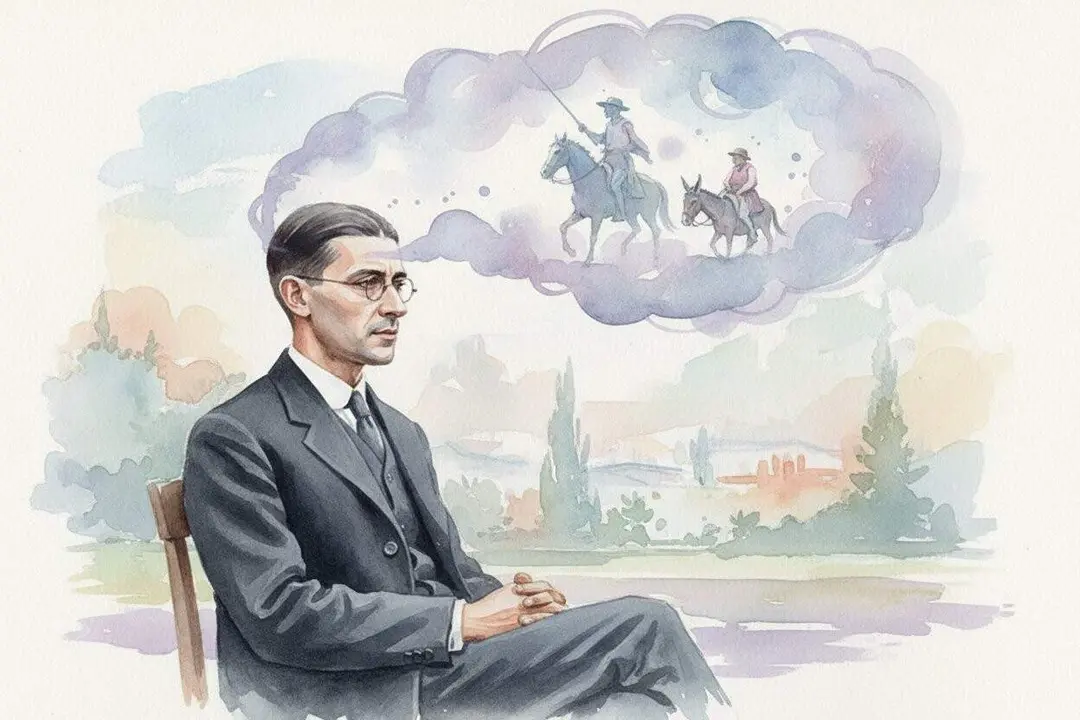

Franz Kafka transformed fantasy into a disturbing world, where a man becomes a beetle overnight. But, for him, the misfortune of Don Quixote was not his fantasy, but precisely Sancho Panza, a ball crusher of idealistic impulse. This curious Kafkaesque perspective forces us to question the relationship between imagination and reality.
The Kafkaesque vision of fantasy and reality
Kafka, a writer with a vast inner world
Kafka wrote stories that breathe anxiety and guilt, but always from a perspective that questions reality more than fantasy. His inner world was violent and full of ideas that he transformed into art, even though he himself wanted many texts to disappear.
Sancho Panza, on the other hand, represents – for Kafka – the voice of stubborn realism, which extinguishes Don Quixote’s freedom and creativity. A punishment for any idealist.
The paradox of Don Quixote and Sancho Panza
Kafka suggests that Don Quixote’s misfortune was not his fantasy, but the reality that Sancho wants to show him. This figure is not just a squire, but a symbol of limiting pragmatism that crushes imagination.
Realism, according to Kafka, is a lethal enemy to mental freedom and the drive to live according to one’s own dreams.
The internal bipolarity: Sancho as Don Quixote’s double
A play of contradictory personalities
Kafka wrote about a theory where Sancho not only restrains Don Quixote but also creates him to escape his own demons. It is a modern and almost psychotic view, where reason and madness coexist in the same individual.
This idea anticipates intuitions we see today in popular culture, where the more sensible part serves to minimize risks but often prevents the imagination from flying.
The fun part and the sensible part
We all have a wilder version and a more cautious one. But, as Kafka noted, it is often the sensible part that dominates, leaving creativity locked up like a child who cannot play in the supermarket ball pit during quiet midday hours.
This internal tension is one of the great human conflicts, especially for those with a rich and powerful inner world.
The philosophical legacy of Don Quixote and imagination
Unamuno and Ortega y Gasset on the meaning of life
Don Quixote has been read as humor, but also as a symbol of an ideal that gives meaning to existence. Unamuno defended that a life with purpose, even if impractical, can be more truthful.
Ortega y Gasset saw quixotism as a way of looking at reality, rather than merely accepting it as it is. This tension between project and reality is at the core of much philosophical thought.
The need for a space for fantasy
Psychology and psychiatry agree: mental health needs a space for creativity and inner play. When this space is suffocated, life becomes flat and fragile.
Kafka and Don Quixote remind us that not all lucidity is useful, and that depressive realism can be more harmful than fantasy itself.
Reality often seems to want to limit imagination, but the story of these two characters shows us that the freedom of the mind is a battle worth fighting. What do you think?