The BYD scientist warns: solid-state batteries ready but with challenges
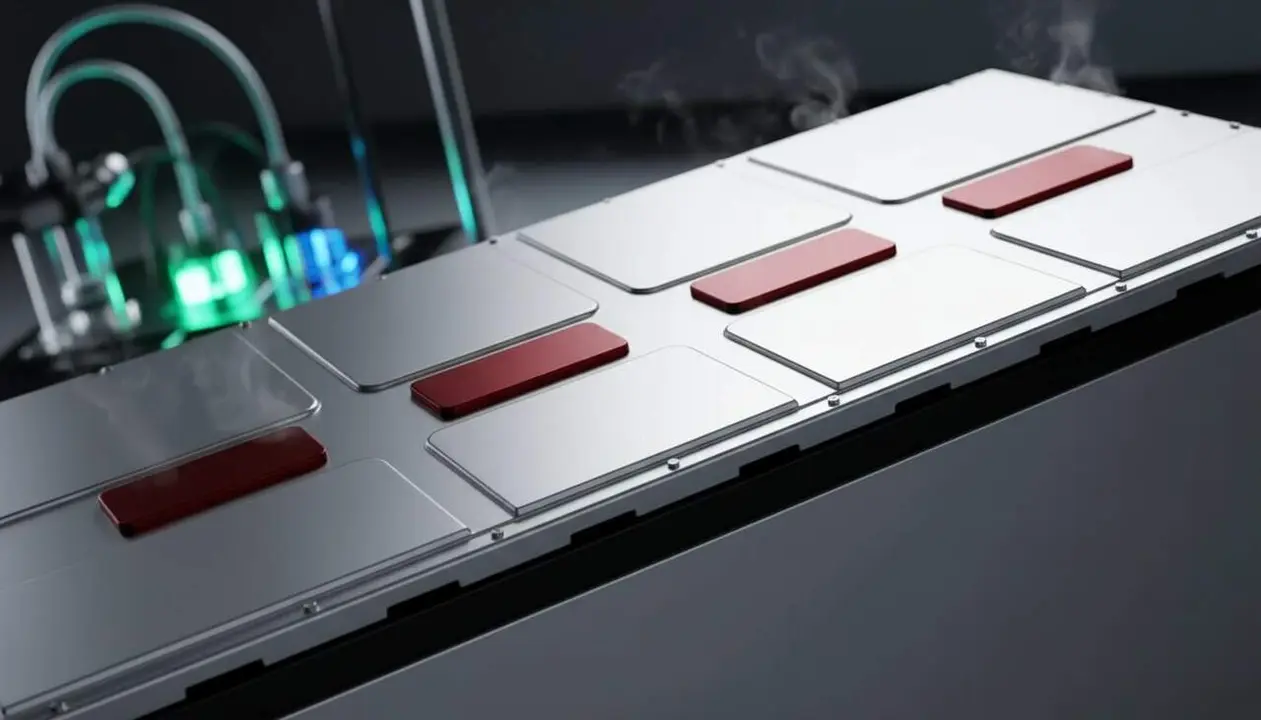

Imagine that the battery of your electric car promises to be the future but is still trapped in a laboratory, far from your usual routes. This is precisely what Lian Yubo, the chief scientist of BYD, the Chinese giant that wants to energize the industry, tells us.
But before you start calculating to change your car this very year, it is important to understand that reality is a bit less spectacular than you imagine. Solid-state batteries are ready, yes, but not without a bunch of problems that still need to be solved.
BYD and the path to solid-state
A stage of "critical progress"
Dr. Lian Yubo assures that they have passed the theoretical phase and entered a "stage of critical progress." This means that chemistry and materials show more than promising results in the laboratory, especially in cell stability. But not everything is as easy as it seems: the solid-solid interface and the suppression of lithium dendrites pose significant limitations.
The coexistence with LFP batteries
BYD does not believe that solid-state will soon replace the famous LFP (Blade Battery) batteries. In fact, they expect them to coexist for at least 20 years, with LFP batteries dominant for their cost and reliability, while solid-state focuses on the luxury and high-performance segment.
BYD schedule: from luxury to mass production
Key phases until 2030
According to their roadmap, the 2026-2027 stage will be for validation in super-luxury demonstration vehicles, possibly under the Yangwang brand, with very limited series. In 2027, pilot production will start with sulfur electrolyte batteries, very powerful but expensive, and after 2030, an industrial scale-up is planned for a broader market.
The challenges of manufacturing and integration
But the big obstacle is not only creating the cell, but integrating it into the car. Dr. Yubo emphasizes that thermal management and mechanical stress are serious problems because these batteries are very rigid. Manufacturers must be involved from the start to avoid malfunctions.
What does it mean for users and the market?
Patience, the key
If you think the car you buy today will be obsolete next year because of a revolutionary battery, you are mistaken. Solid-state technology will arrive, but at first it will only be available for vehicles costing more than 100,000 euros. The cost will be a clear barrier for the average consumer.
Energy density and a bet on sodium
BYD is working to achieve densities between 400 and 500 Wh/kg, which would double the range without increasing weight. At the same time, they are pushing sodium-ion batteries with 10,000 cycle lifespans, aimed at economical vehicles and energy storage. Thus, they cover both performance and durability at low cost.
The reality is that BYD remains confident in its LFP batteries beyond 2030, showing that the solid-state revolution will be slow and gradual, not a sudden change.