What to eat during menopause to feel better: Marta Marcè's keys to balancing hormones
Menopause is not just a matter of hormones: it also involves inflammation, energy, muscle, bone health, microbiota, and metabolic stability. In one of her informative videos, nutritionist Marta Marcè, originally from Valls, focuses on a clear idea: it’s not about eating less, but about eating better and in a smarter way to help the body through a stage of major changes.
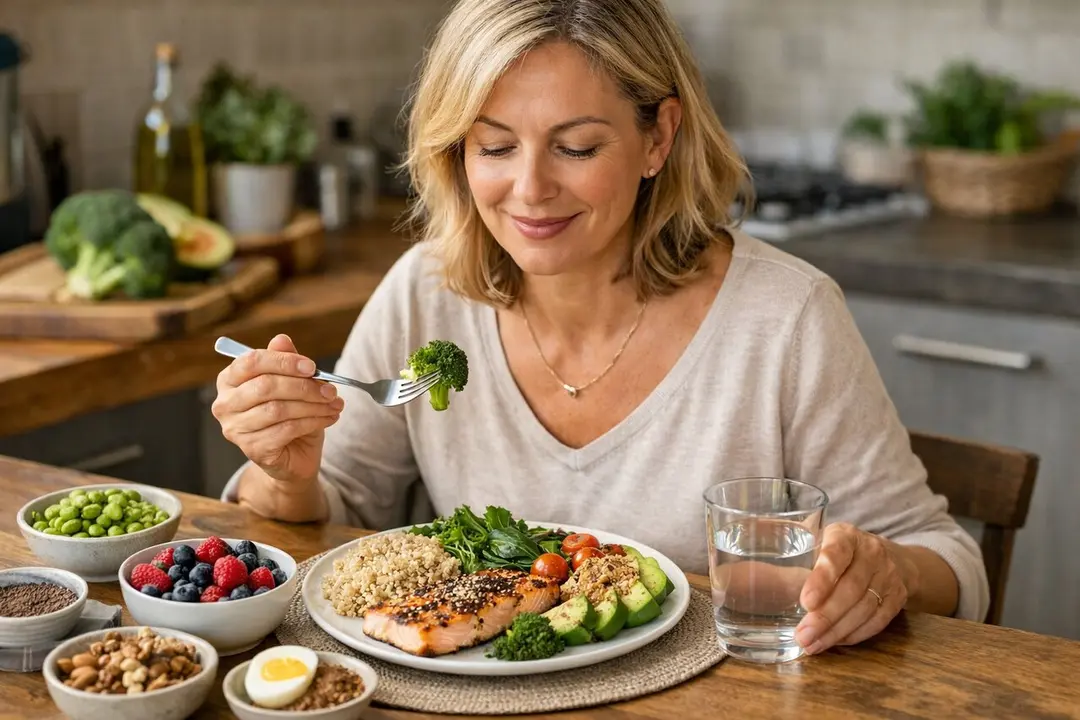

Nutritionist Marta Marcè explains which foods can help during perimenopause and menopause to improve energy, the microbiota, muscle mass, and hormonal well-being.
Beyond the symptoms: understanding what is happening to the body
During perimenopause and menopause, many women notice that their bodies no longer respond as before. Fatigue, inflammation, changes in body composition, sleep disturbances, brain fog, or a bewildering sensation of not fully recognizing themselves appear. Marta Marcè insists that this process should not be faced with fear or resignation, but with knowledge and useful tools.
One of the main ideas she conveys is that not everything can be explained solely by the drop in estrogen. The way we metabolize glucose, the state of the gut microbiota, low-grade inflammation, the gradual loss of muscle mass, and the quality of daily habits also come into play. For this reason, nutrition ceases to be a minor detail and becomes a key piece of well-being.
The foods Marta Marcè puts at the center
In her educational message, Marcè advocates for a diet that supports the body rather than depletes it. This translates into prioritizing real foods, rich in fiber, antioxidants, healthy fats, and quality protein, with the ability to help regulate glucose, nourish the microbiota, and support hormonal balance.
- Flaxseeds: highlighted for their lignan content, plant compounds that can help modulate estrogen and promote better intestinal health.
- Cruciferous vegetables such as broccoli, cauliflower, or cabbage: considered especially interesting for their role in hormonal metabolism and their antioxidant and anti-inflammatory potential.
- Legumes: provide fiber, plant protein, and satiety, and can be great allies in maintaining more stable glucose levels.
- Small oily fish like sardines or anchovies: useful for their omega-3 content, especially valuable at a stage when it is advisable to protect the brain, heart, and inflammatory response.
- Fermented soy such as tempeh or miso: presented as an interesting option for its isoflavone content and the help it can offer in hormonal adaptation.
- Red fruits: for their richness in antioxidants and their interest for cognitive and cardiovascular health.
- Nuts: a practical source of healthy fats, minerals, and sustained energy.
In other contributions, she has also highlighted the value of foods like eggs, for their nutritional interest, and tahini, especially useful for its contribution of calcium and healthy fats. All of this fits with her way of understanding menopause: not as a stage of scarcity, but as a moment when the body needs more support and better nutrition.

It is not a strict diet: it is a new way of self-care
One of the most valuable aspects of Marta Marcè’s discourse is that it moves away from the logic of restriction. Instead of promoting harsh diets or quick slimming formulas, she proposes reviewing the quality of the plate and thinking about what the body really needs at this life stage. Her viewpoint is much more functional: less obsession with the scale and more attention to energy, strength, rest, and long-term health.
This implies, according to this perspective, avoiding constant glucose spikes, ensuring a good fiber base, incorporating enough protein, and not demonizing foods that can be useful when well chosen and well combined. Menopause, the message goes, is not crossed by going hungry, but by building habits that help you feel better.
Microbiota, muscle, and bone health: the triangle that must not be forgotten
The summary of her message is clear: at this stage, simply “eating healthy” generically is not enough. The focus must be on what is often neglected. The gut microbiota is key because it participates in metabolic and hormonal processes. Muscle mass is essential because it protects metabolism, functionality, and future health. And bone health gains prominence as hormonal protection decreases.
For this reason, the nutrition Marta Marcè advocates cannot be separated from other pillars such as strength exercise, rest, and a kinder perspective towards one’s own body. Menopause is not the end of anything: well understood, it can be the start of a stage lived with more awareness, better judgment, and greater well-being.
An educational approach that connects with many women
The success of her discourse lies, in large part, in this: she explains with understandable language a topic that for years has been experienced with silence, clichés, and much misinformation. Her approach does not promise miracles, but something much more useful: understanding what happens, knowing why certain symptoms occur, and discovering that small sustained changes in diet can make a real difference.
In short, Marta Marcè’s message is as simple as it is powerful: during menopause, taking care of oneself does not mean punishing oneself, but learning to give the body what it needs to keep functioning with energy, balance, and vitality.