Why the original battery of this Tesla Model 3 loses range
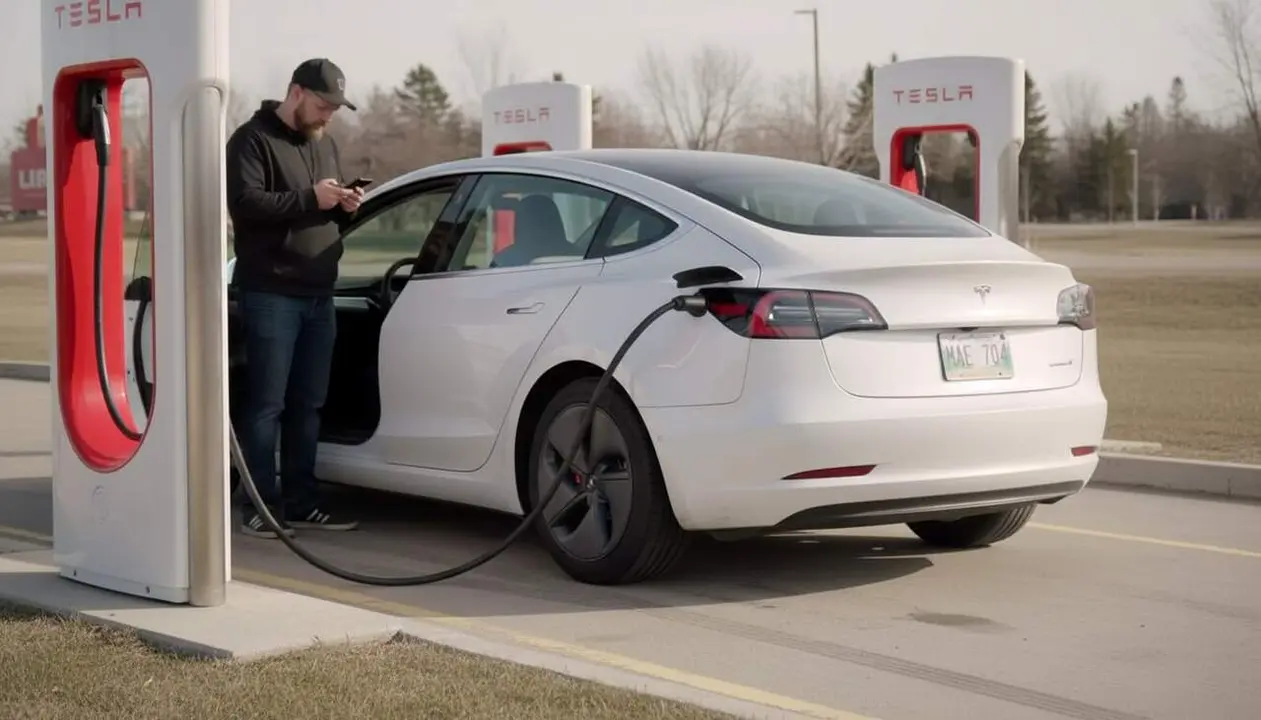

Imagine a Tesla Model 3 that has attracted more attention for its mileage than for its top speed. More than 611,000 km traveled since 2019, and the original battery still holds, although not without losses. It’s not a museum car, but a true hard worker that has endured everyday use without any pampering.
Battery degradation is the headache of any electric vehicle owner, but here is a real case that breaks some stereotypes. But why has this Tesla Model 3 lost up to 132 km of range? It’s not just a number; it’s a whole story about how batteries age with use and time.
The real test of the Tesla Model 3 after 7 years and 611,000 km
In 7 years, this Tesla Model 3 Standard Range has accumulated about 380,000 miles (just over 611,000 km) of intensive use, under varied climatic conditions and real charging habits (no special treatment). Drive Protected, a Canadian workshop specializing in electric vehicles, analyzed the state of the original battery and found that its capacity dropped by up to 34.2%, losing 132 km of the initially rated 386 km range.
Currently, after a full charge, the odometer shows a range of only 258 km, which is still more than enough for many urban or short-distance drivers. This loss, although significant, matches expectations given the intensive use and age of the vehicle.
Health status below 70%
The diagnosis is clear: the battery is below 70% of its optimal capacity. This figure is considered the threshold where it is advisable to start thinking about replacing the battery. But until then, the car remains fully functional and useful.
It has also been verified that, despite the degradation, the car can cover more than 220 km at highway speed (110 km/h) with an average consumption of 14.55 kWh per 100 km, a fairly respectable figure considering its age and mileage.
Factors that influenced battery degradation
Thermal management and intensive use
The key that helped this battery last so many kilometers is Tesla’s active thermal management, which keeps the cells within an optimal temperature range to avoid mechanical stress during charging and discharging. Without this system, degradation would have been much worse.
Also, the type and frequency of fast chargers have conditioned the battery’s lifespan. Constant use of ultra-fast chargers accelerates capacity loss, as does regularly charging the battery up to 100%.
Real behavior versus studies
Many studies around the world show that lithium batteries last longer than previously thought, but reality depends heavily on use. This Model 3 is a living example: with 70% capacity after more than 600,000 km, it proves that the technology is more durable than many believe.
But not all news is good: replacing the battery when the time comes can cost between 13,000 and 20,000 euros, a figure not everyone is willing to accept. And by the way, the chassis and other mechanical components will probably wear out faster than the electric powertrain itself.
What does this mean for future Tesla and electric car owners?
Sufficient range for daily use
With a range of 258 km after 7 years and over 600,000 km, this Tesla Model 3 remains a viable option for many drivers who don’t need to make massive trips every day. In addition, consumption and performance hold at respectable levels.
Maintenance and replacement forecast
Experts recommend monitoring battery health once it drops below 70% and preparing for a future replacement. But the good news is that current batteries last longer than ever, and the industry increasingly offers better support and options for users.
In the end, this Tesla Model 3 is tangible proof that, with intensive use and proper thermal management, the battery can last many kilometers. But, like everything in life, it’s not eternal and a time will come when you have to pay to replace it.
The reality is that the electric powertrain lasts longer than many other components, and range loss is something owners will have to accept, but it should not be a sufficient reason to discard electric vehicles today.