While China manufactures, Europe leads the recycling of electric batteries
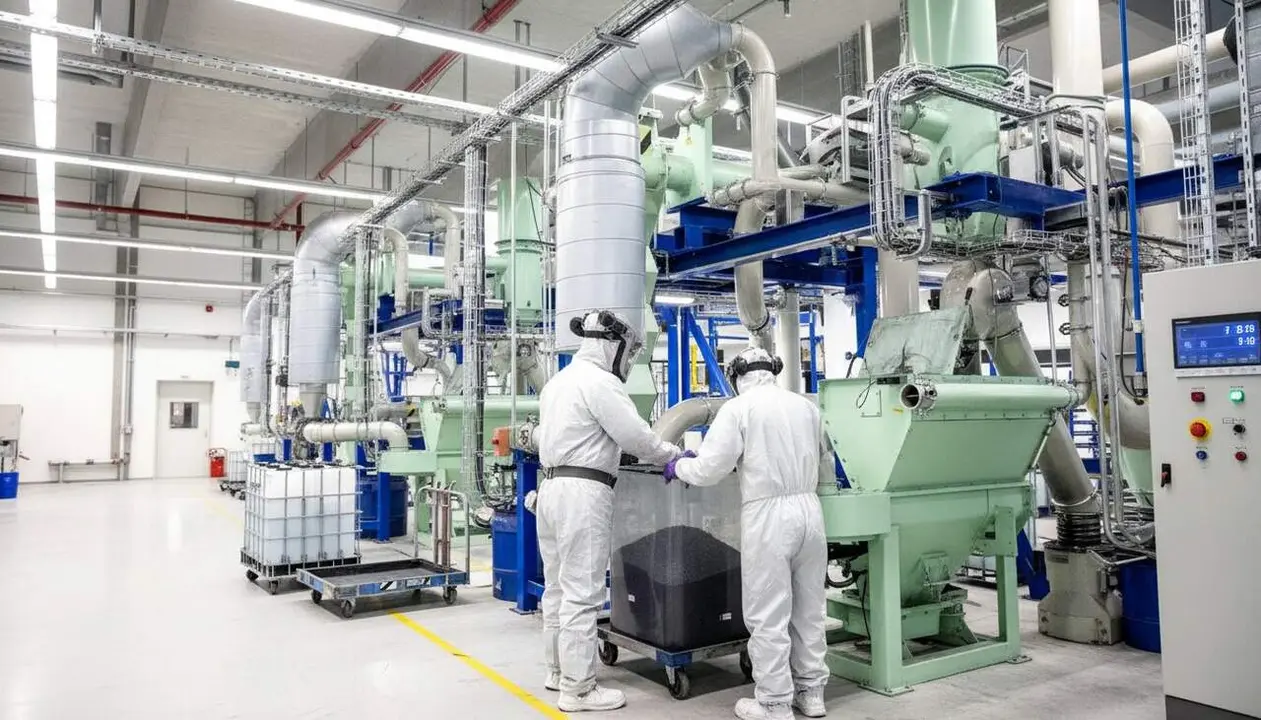

If you ever thought that the problem with electric cars ends at manufacturing, you are mistaken. The real challenge comes when the batteries reach the end of their useful life. And this is where the technological battle gets interesting.
China manufactures most batteries, but Europe is putting all its effort into leading the recycling and transformation of these. It’s not just a matter of waste, but of who controls a key sector of mobility.
While China manufactures, Europe transforms: two worlds in the same sector
📈 Battery manufacturing patents: 16% growth
🌍 Patent share 2023: Asia 63%, Europe 20%
🔋 Batteries out of use 2030: 1.2 million; 2040: 14 million
The ticking bomb of battery recycling
Electric mobility is growing, and with it, the volume of batteries reaching the end of their useful life. From the mid-2030s onward, the massive arrival of these obsolete batteries will be unstoppable. If it now seems like a distant problem, the reality is that the alarm has already been sounded: industry, research, and companies are racing to find effective and sustainable solutions.
Europe and circularity: more than recycling, transforming
Europe not only collects batteries but invests in the chemical transformation and reuse of critical materials. This approach reveals that the old continent is more a consumer than a producer, but also shows that it can lead the key phase of the circular model, the one that can truly make a difference.
The exponential growth that leaves no one indifferent
Patents and innovation: the silent war
The data speaks for itself: patents related to battery circularity are growing at a 42% annual rate, well above the 16% in manufacturing. While the global industry expands, innovation in recycling and reuse is accelerating strongly.
The electric market already sets the pace
In 2025, one in every four cars sold worldwide was electric, a clear sign that demand and the volume of out-of-use batteries will explode. It is estimated that by 2030 we will have to manage 1.2 million batteries and by 2040, 14 million. A real rollercoaster for the industry.
Asia vs. Europe: a duel of patents and strategies
China dominates manufacturing but faces a problem
With 63% of global patents in 2023, Asia, especially China, leads production and the early steps of recycling. Companies like Brunp went from a 5% share in 2013 to nearly 30% currently. But not everything is golden: much of the recycling in China takes place in workshops that don’t comply with regulations, fueling a black market for recycled batteries.
Europe, the engine of chemical transformation
With 20% of patents focused on circularity, Europe boasts quality and innovation in the transformation and reuse of materials. Antonio Campinos, president of the EPO, reminds us that a solid industrial fabric and favorable regulatory frameworks are key to leading the new circular economy of batteries.
| Aspect | Asia (mainly China) | Europe |
|---|---|---|
| Patent share 2023 | 63% | 20% |
| Industrial focus | Production and initial recycling | Chemical transformation and reuse |
| Highlighted problems | Illegal workshops and black market | Regulatory frameworks and technological innovation |
| Opportunities | Rapid expansion and volume | Leadership in circular economy and sustainability |
The reality is that battery recycling and reuse is more than an environmental issue: it is a commercial and technological battle that will determine who rules mobility of the future.
Europe not only wants to be the final consumer but the great transformer that recovers critical materials and closes the loop. And this commitment will be key to reducing mining dependence and environmental impact.
Meanwhile, China remains the factory of the world, but with a growing problem: managing an enormous volume of batteries accumulating without strict control, making part of the recycling more of a shady business than a clean industry.
But it does not end there. The energy storage sector, which already represents almost 40% of all energy patents, will continue to be a battleground where innovation will set the pace.
Antonio Campinos makes it clear that whoever has a strong industrial ecosystem, good policies and access to recycling materials will have the leading voice in this new circular economy. And, as of now, Europe seems well positioned to play this game.
The coming years will be decisive to see if Europe converges to lead the transformation or remains relegated to a secondary role in the global chain. And you, what do you think will happen?