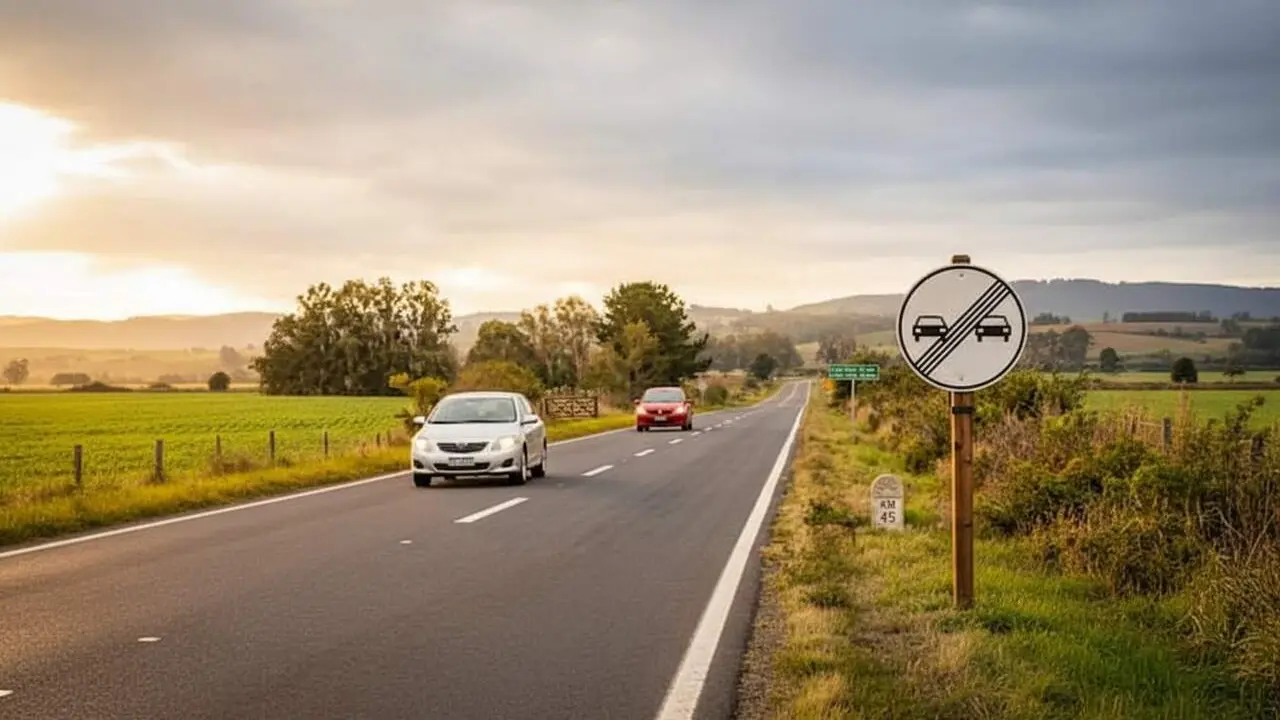
BOE officializes the end of cyclists on the shoulders: what changes?


Any given Sunday on the road and you see the same: cyclists on the shoulder, a space that could soon disappear. The Directorate-General for Traffic (DGT) has not been satisfied with warnings and now is taking direct action with a new order that will change the way people move by bicycle on asphalt.
But it is not just a matter of safety, but of priority and infrastructure. The Official State Gazette (BOE) has already made official the new regulation that partially or totally eliminates shoulders to make way for segregated bike lanes on state roads. And this is no joke.
The new reality for cyclists on the road
At first, the idea may seem utopian or even absurd to those used to seeing the shoulder as their refuge on the road. But the reality is that the BOE allows the construction of bike lanes that occupy the shoulder space, with very clear conditions: not to compromise safety and to guarantee route connectivity.
Official regulation and DGT objectives
The new ordinance, effective from October 10, 2025, is part of the National Bicycle Strategy and the Safe, Sustainable, and Connected Mobility Strategy 2030. The goal? For the bicycle to stop being an intruder on the road and become a protagonist with its own, safe, and continuous space.
Sources from the DGT indicate that this measure aims to reduce cyclist accidents, which caused 46 deaths in Spain in 2024, and to improve coexistence between motorized vehicles and bicycles.
What it means for users
Cyclists will no longer be forced to ride on a shoulder that is often narrow or full of debris. Instead, they will have segregated bike lanes, even if that means removing the shoulder.
For motor vehicle drivers, the new regulation aims to avoid confusion and risks, since the bicycle will have a clearly defined and priority space.
The new rules for cyclists according to the DGT
How to ride in the city
- Bicycles must ride as far to the right as possible on the roadway.
- A safety distance must be maintained from parked vehicles and sidewalks.
- In groups, cycling two abreast is allowed, no more.
Riding on the road
- Cyclists must ride on the right shoulder if it exists and is passable.
- They may leave it on long descents, provided it is safe.
- They may ride side by side, positioned at the far right limit, but in areas without visibility they must ride in single file.
These points are not new, but the DGT has announced an increase in controls to ensure compliance, especially now that the shoulder may disappear to make way for bike lanes.
The big change: goodbye shoulders, welcome bike lanes
The BOE makes the transformation official
The Official State Gazette has published the regulation that opens the door to partially or totally eliminate shoulders to build segregated bike lanes on state roads. This measure, effective from October 10, 2025, seeks to ensure that cyclists have a continuous and safe network.
According to the legal text, this transformation will only be allowed if it does not endanger road safety or impair the normal functioning of the road.
Impact on safety and mobility
Experts and DGT officials confirm that a connected and priority cycling network can significantly reduce accidents and make the bicycle more appealing as a means of transport.
The measure also responds to the need to adapt infrastructures to the increase in the number of cyclists and to the social demand for healthier and more sustainable mobility options.
| Aspect | Detail |
|---|---|
| Effective date | October 10, 2025 |
| Regulation | New regulation published in the BOE |
| Main change | Partial or total elimination of shoulders for segregated bike lanes |
| Responsible authority | Directorate-General for Traffic (DGT) |
| Objective | Improve cyclist safety and connectivity |
The new regulation is not just a legal change, but a cultural and practical change. Shoulders, often the last resort for cyclists, will disappear in many sections to make way for bike lanes that truly seek to make coexistence with other vehicles safe.
In 2024, the DGT recorded 46 cyclist deaths in Spain, and this measure aims to reduce that dramatic figure. There is now a clear commitment to adapting roads to the real needs of bicycle users.
But much remains to be seen regarding how this new regulation will be implemented in practice and how regular road users will react.
The reality is that the BOE has taken a firm step to say goodbye to cyclists on the shoulders and bet on safe and connected bike lanes. And this, whether you like cycling or not, will change the face of Spain's state roads.