
Justice prohibits SEPE contributions from withdrawing pensions
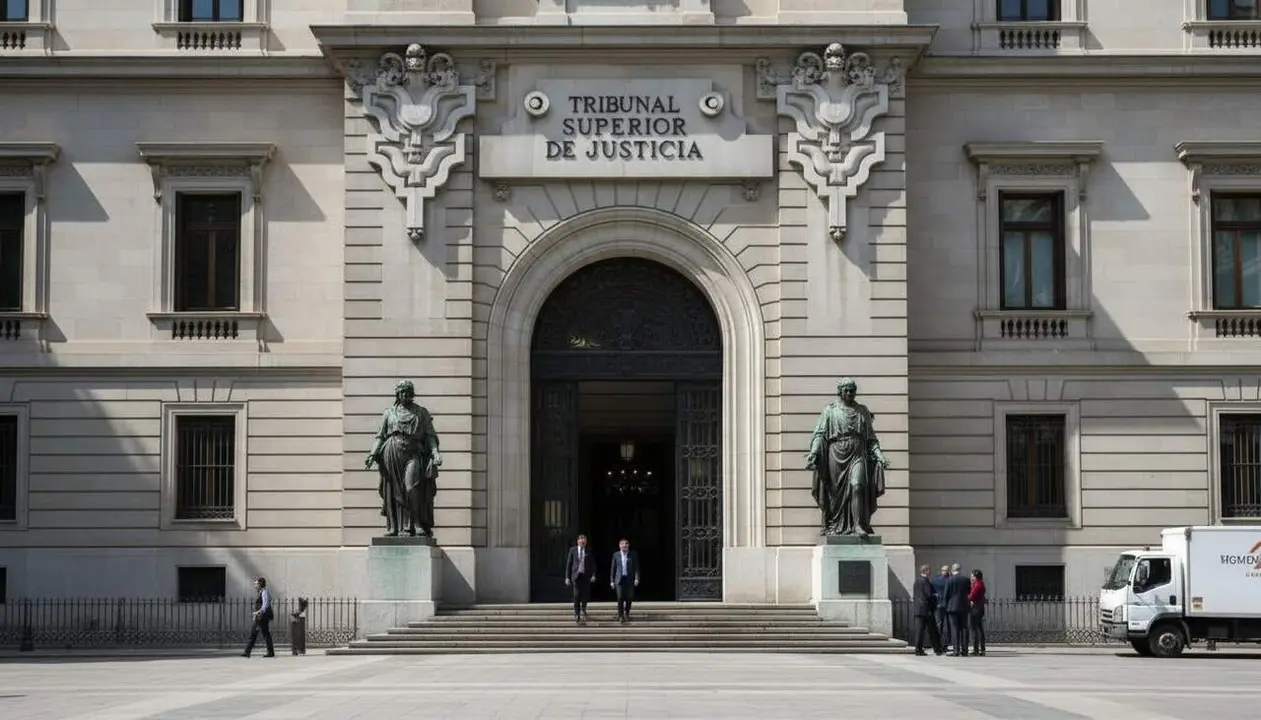

A woman saw her non-contributory pension withdrawn because the Xunta counted contributions she had never actually received as real money. This decision has been overturned after the Superior Court of Justice of Galicia clarified that SEPE contributions for subsidies to those over 52 years old are not real income.
The ruling delivers justice to a beneficiary who lost her benefit when the administration accounted for contributions that do not provide money to her household. What does this mean? That this money "does not exist" for the household unit, nor can it justify the termination of the pension.
The ruling that makes the difference
What happened with the beneficiary
The conflict began when the Xunta de Galicia decided to withdraw the pension from a woman because, according to them, her economic unit exceeded the legal resource limit. To make this calculation, they added the contributions paid by SEPE on her behalf while she was receiving the subsidy for those over 52 and the fees her spouse paid under a special agreement.
The administration also demanded over 10,300 euros for an alleged undue payment. But the TSJ overturned this decision, stating that these amounts are neither income nor earnings, but contributions without direct patrimonial attribution.
What does the regulation say?
Royal Decree 357/1991 and Order PRE/3113/2009 explain which incomes must be counted to withdraw non-contributory pensions. Furthermore, the General Social Security Law establishes that only "assets and rights" generating effective income are counted.
The court points out that the contributions made by SEPE for these benefits are not money entering the family unit, but contributions for their future retirement. This means they cannot be considered current earnings.
The difference between contribution and effective income
The real value of a contribution
The key lies in understanding that a contribution is a technical concept: SEPE pays for future retirement, but the beneficiary does not receive this money right now. It is not a salary nor an immediate right to money, but a contribution for a possible future.
Thus, these contributions do not generate income to live on today and cannot be used to withdraw a non-contributory pension.
Special agreements and pensions
The fees of special agreements, even if paid directly by the interested party, aim to maintain the right to a future contributory benefit. They are not money that the affected person can use for immediate expenses but an investment in the long term.
For this reason, the ruling confirms that these fees likewise cannot be counted as income to terminate a non-contributory pension.
Impact and practical consequences
The decision of the TSJ Galicia
The Superior Court of Justice of Galicia has annulled the pension withdrawal and nullified the claim for more than 10,000 euros. This means that the beneficiary retains her right to the non-contributory pension without these contributions affecting her.
Moreover, the TSJ has imposed the costs of the proceeding on the Xunta de Galicia, a clear warning to the administration.
What can happen from now on?
The ruling sets a precedent for similar cases across Spain. The judiciary makes clear that not all contributions or payments count as real income to terminate non-contributory pensions.
Therefore, many beneficiaries will be able to defend their rights with this argument and avoid undue withdrawal of benefits.
The reality is that this case opens the door to recognizing that contributing is not receiving payment and that, no matter how much the administration wants to do the math, there are limits in understanding what real income is.