Why does rinsing the rice change the final result so much?
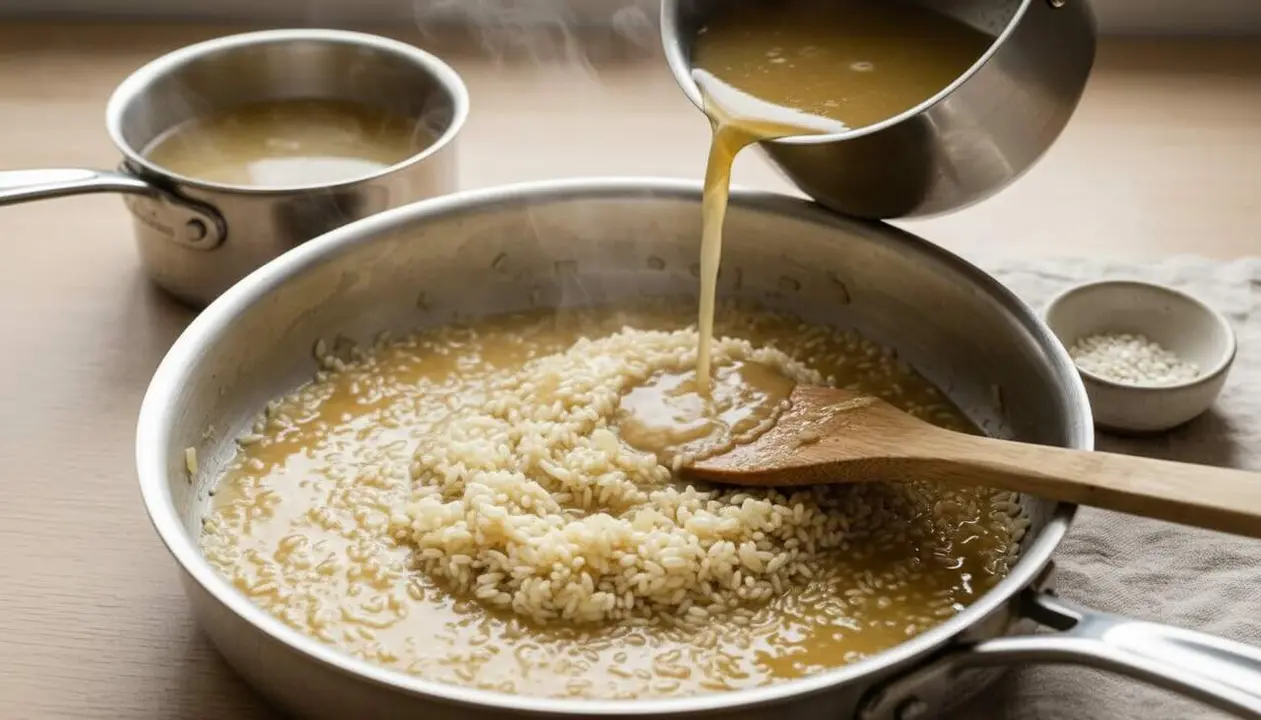

To pearl the rice is a step that appears in many recipes, especially in dishes like risotto or creamy rice. It is usually done after preparing a sofrito or aromatic base, for example with onion, garlic, or vegetables, which should have little water to avoid the rice starting to cook too early.
The process consists of dry roasting the rice, without rinsing it to preserve the starch, over medium heat, stirring gently until the grain changes appearance and acquires a shinier and slightly translucent tone on its edges, without browning.
What does pearl the rice mean
To pearl is nothing more than applying a thin layer of hot fat over the raw grain, usually with oil or butter, so that it stops being matte white and becomes shiny and slightly translucent, without frying or burning.
It is a delicate point: if the rice remains too white, nothing has happened; if it turns golden, we have gone too far. The right time is when the grains intertwine with the sofrito and warm up, adopting that appearance reminiscent of mother-of-pearl, from which the term comes.
How to do the pearling
First, cook the aromatic base, which can range from an onion sautéed in butter to a sofrito with garlic and tomato, always controlling to avoid excess moisture. Then add the dry rice and stir carefully so that each grain is coated with fat.
In a minute or two, you will see how the grains separate and shine, with an opaque center but translucent edges. At this moment, you can add the liquid called for in the recipe, such as hot broth or wine. Extending this step unnecessarily can worsen the result.
What difference does pearling the rice make
Thanks to this layer of fat that coats each grain, the rice absorbs the liquid more slowly and in a controlled manner, preventing it from swelling suddenly and falling apart. This translates into rice with more defined grains, less sticky, and a more pleasant texture in the mouth.
In recipes like risotto or pilaf, this detail can be crucial to achieving a dish with body, where each grain maintains its presence without turning into a pasty mass.
Why does the result change so much
The role of fat in cooking
The fat that surrounds the rice grain slows the entry of moisture, making the cooking process more even and controlled. Thus, the grain does not break down or stick as much, maintaining its structure.
But if the point is exceeded, the grain may lose the ability to release the outer starch, affecting the creaminess in dishes like risotto, where balance is fundamental.
When is it advisable to pearl the rice
Risotto is the clearest example where this step is essential. It also works in pilafs and creamy rice dishes where you want the grain to remain whole and well defined. In contrast, in traditional paella, pearling can be counterproductive if the sofrito is too wet or done irregularly.
In fact, some cooks prefer to add the rice directly to boiling broth to ensure homogeneous and simultaneous cooking of all grains.
The key is knowing what kind of rice you are making and what texture you want to achieve, because not all dishes need or benefit equally from this step.
Common mistakes when pearling the rice
Heat too high
One of the most common mistakes is using too high heat, which burns the rice on the outside without heating it well inside. This causes a hard grain with uneven cooking and a toxic toasted flavor that does not always fit.
Sofrito with excess water
A sofrito that is too wet causes the rice to cook too early, losing the pearling effect and causing the grain to stick or fall apart. The secret is a reduced and well-controlled sofrito to avoid this problem.
You should also stir gently, just to coat the grain, not to break it or damage it. The rice speaks, and when it shines, it is a sign that it is time to start the next step.
If you want to know more details about how to make an authentic rice, this guide can be very useful.
It is also interesting to learn the tricks to prepare the perfect rice according to Valencian chefs, who explain how to choose the right grain and oil.
In short, pearl the rice is a small gesture that can make the difference between a dish with personality and a more dull one. It is not magic but physics and chemistry applied to cooking.
When done well, the result is rice with a more defined point and a more intense flavor, which makes every spoonful worthwhile.