Atsegiñe, the bicolor Basque potato with 30% more antioxidants
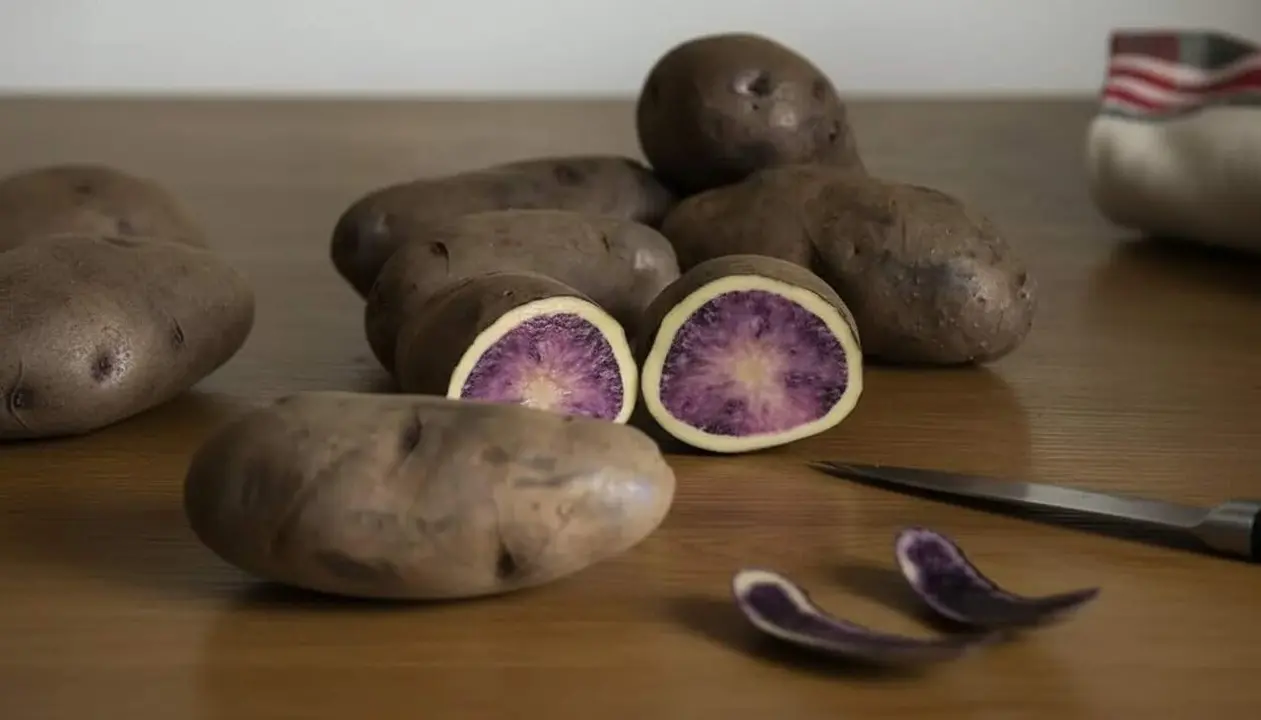

In the Basque Country markets, a potato that does not go unnoticed has started to be talked about: it is neither white nor brown, but bicolor, with a purple skin that catches the eye. This novelty not only surprises because of its appearance but also due to its ability to resist diseases and remain free of chemical additives.
Farmers and food industry professionals are eager, as this potato brings added value that could revolutionize the way such a classic product is understood. But what does this new variety, which took more than seven years to develop, really hide?
Atsegiñe: the potato that redraws tradition
⏱️ Development: 7 years of research
🔥 Antioxidants: 30% more than traditional potatoes
👨🌾 Characteristics: Bicolor purple and white skin
Research that breaks molds
The technological center Neiker, responsible for this innovation, has achieved a potato with unique characteristics after manually crossing selected varieties. This work culminated after six years of field testing, surpassing strict quality and stability controls.
The name, 'Atsegiñe', which in Basque means "pleasant" or "tasty," sums up the intention: to offer a product that captivates both by its appearance and its quality.
Industrial and culinary applications
One of the most relevant novelties is the possibility of using this potato to produce colored ‘chips’ without the need for additives, thanks to its stable natural pigmentation. This feature opens new doors for the food sector, which seeks more natural and attractive products.
Its crispy texture and control of the level of reducing sugars ensure a frying that avoids bitterness or darkening, qualities much appreciated by both chefs and consumers.
Nutritional value and natural resistance
Antioxidants that make a difference
The Atsegiñe potato stands out for containing 30% more antioxidants than white varieties, thanks to the anthocyanins that give it its purple color. These substances act against oxidation and cellular aging, positioning the tuber as a functional ingredient for healthy nutrition.
According to Nacho Ruiz de Galarreta, a researcher at Neiker, these properties not only provide health benefits but also remain after cooking or frying, something uncommon in other pigmented varieties.
A natural defense for crops
From an agricultural point of view, Atsegiñe presents a notable genetic resistance to late blight and the 'Y' virus, two of the most problematic diseases affecting potatoes. This implies fewer phytosanitary treatments, savings for the farmer, and a more environmentally sustainable operation.
It is also worth noting that this variety requires special storage, maintaining a temperature above 7 degrees to preserve its optimal qualities, especially for chip production.
The future of Basque potatoes is served
Market and outlook
With its registration in the Commercial Variety Register and the Community Plant Variety Office, Atsegiñe is ready to reach the market through exploitation licenses that can boost new lines of innovative products.
Neiker trusts that this bicolor potato will open new opportunities, especially in the segment of healthy and attractive snacks for the most demanding consumers.
Challenges ahead
The main challenge will be consolidating its presence and acceptance in both traditional and modern markets, while maintaining the quality and sustainability that gave rise to it. For farmers, it also represents a paradigm shift in potato production, less dependent on chemicals and more respectful of the environment.
The Atsegiñe project is a clear example of how food research can transform such an everyday product into a proposal that combines tradition, technology, and health.
The reality is that Atsegiñe is not just a different potato; it is the reflection of an agricultural model that looks to the future without losing its essence.