With Mercadona, Lidl, and Dia having increased sales per store by 45%
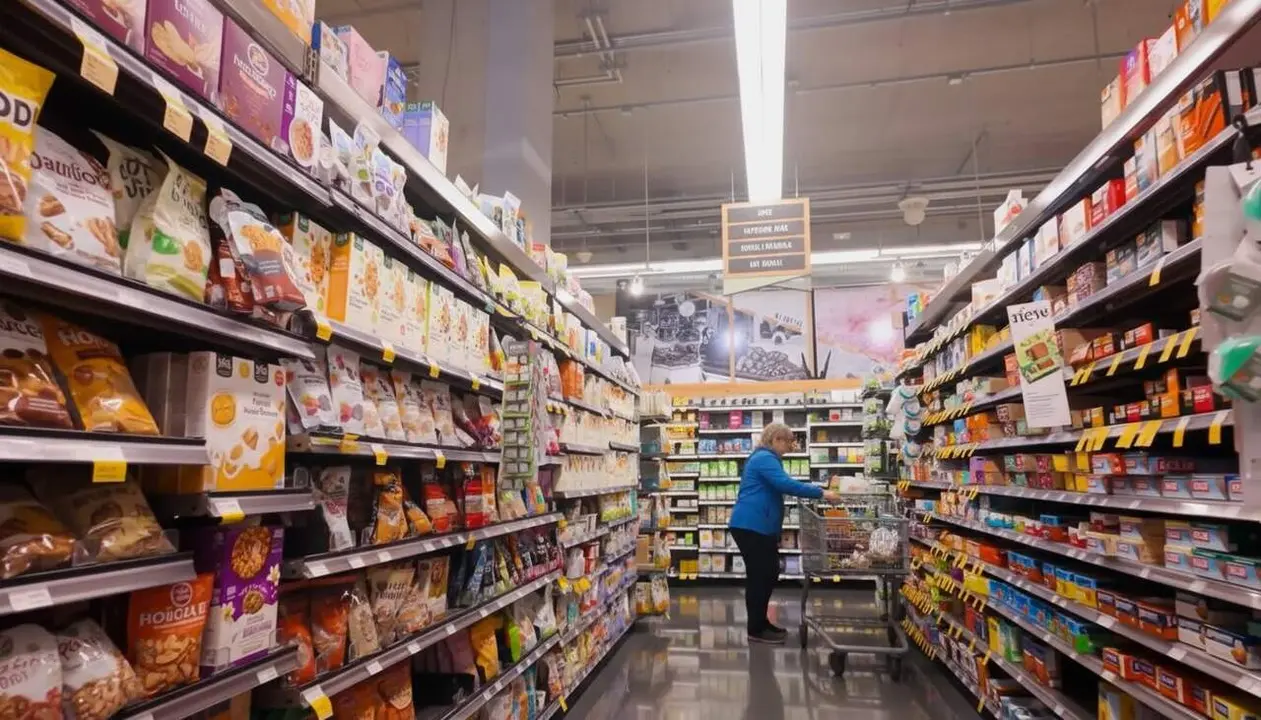

Local supermarkets have ceased to be places where only quick shopping is done. Mercadona, Lidl, and Dia have significantly increased the average sales per store, driven by changes in consumption habits and the preference for private label brands.
The growth is not the result of excessive expansion, but of a measured and adapted strategy to the new needs of consumers seeking quality and convenience close to home.
Increase in sales per store at Mercadona, Lidl, and Dia
Mercadona: sustained and focused growth
Between 2021 and 2025, Mercadona has increased the average revenue per store by 48.7%, rising from 15.3 to 22.8 million euros. This increase has been achieved by keeping the number of stores almost stable, moving only from 1,662 to 1,672 outlets, including 60 in Portugal. The key lies in a greater influx of customers and fuller baskets.
Lidl: expansion and consolidation in the market
The German chain has opened nearly 100 more stores, increasing from 650 to 740. With estimated sales in 2025 of 8.1 billion euros, Lidl shows an average sale per store of 10.95 million, 38.3% more than in 2021. Lidl’s strategy combines expansion with increased revenue per location.
Deep transformation of Dia and rationalization strategy
Dia: fewer stores but more profitable
Dia has reduced the number of stores from over 3,700 in 2021 to 2,358 in 2025 after closing unprofitable outlets and selling the Clarel chain. This has allowed the average revenue per store to nearly double, with a 76% increase in five years, reaching nearly 2 million euros per store.
The importance of location and image
Improvement in location, image, and product offering has been fundamental for Dia, which accompanies its store transformation with a strategy that has increased demand and customer loyalty.
The regional landscape and other chains in the Spanish market
Eroski and Consum: growth in regional areas
Eroski, with a regional focus in the north and Balearic Islands, has achieved an increase in average sales per store of 33.5% compared to 2021, reaching 3.68 million in 2025. Consum, with more than 1,000 supermarkets, has exceeded 5 million euros per store for the first time, growing 37% in five years and planning to expand into Madrid.
Carrefour and Alcampo: contrasting evolutions
Carrefour has increased the average sales per store by 7% since 2021, reaching 6.9 million euros in 2025, despite a slight decline in the last two years. Alcampo, affected by the decline of hypermarkets, has seen a 34% drop in average sales per store since 2021, standing just below 9 million euros.
The distribution sector has experienced a notable change in the last five years, where the most agile chains adapted to new habits have achieved not only growth in the number of stores but also in the quality and volume of sales per establishment. Mercadona, Lidl, and Dia lead this transformation with sales per store increases exceeding 45%, marked by consumers’ preference for proximity and private label brands.