They discover an AI that generates millions of new and real molecules
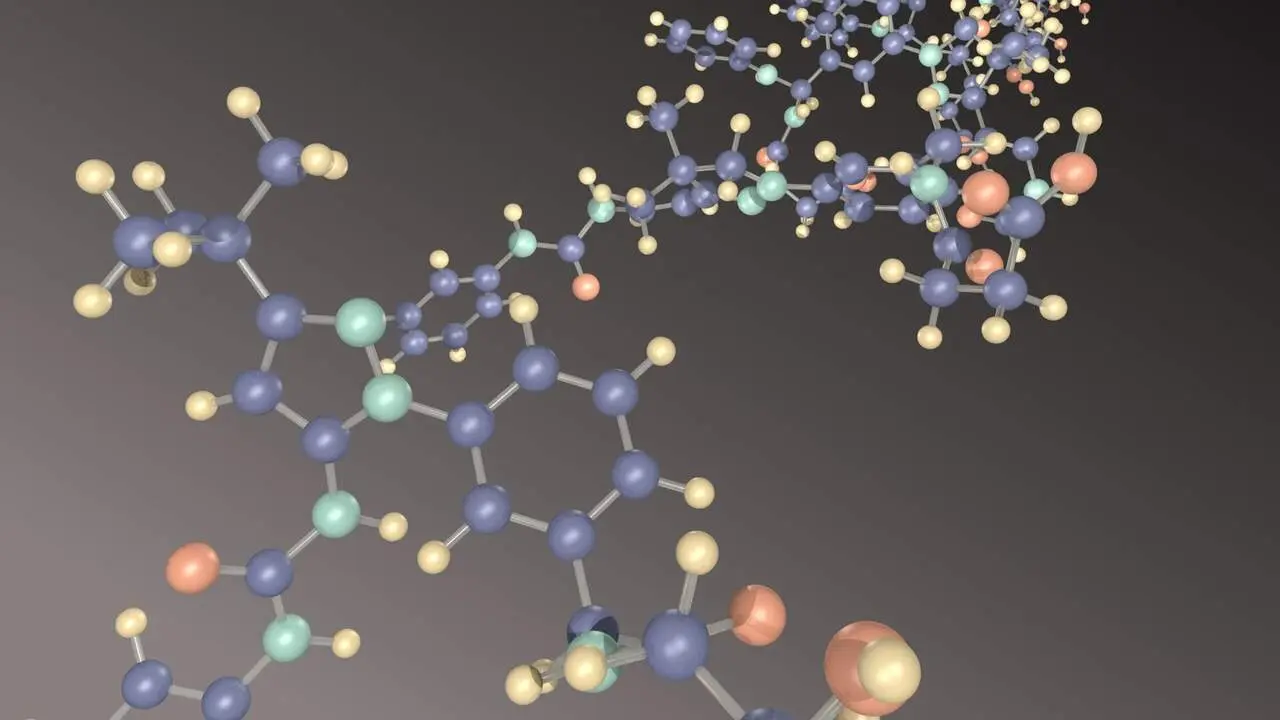

An artificial intelligence capable of creating millions of new molecules that could exist in the real world is changing the game rules in chemistry. Much more than an experiment, this technology promises to revolutionize the way drugs and materials are discovered.
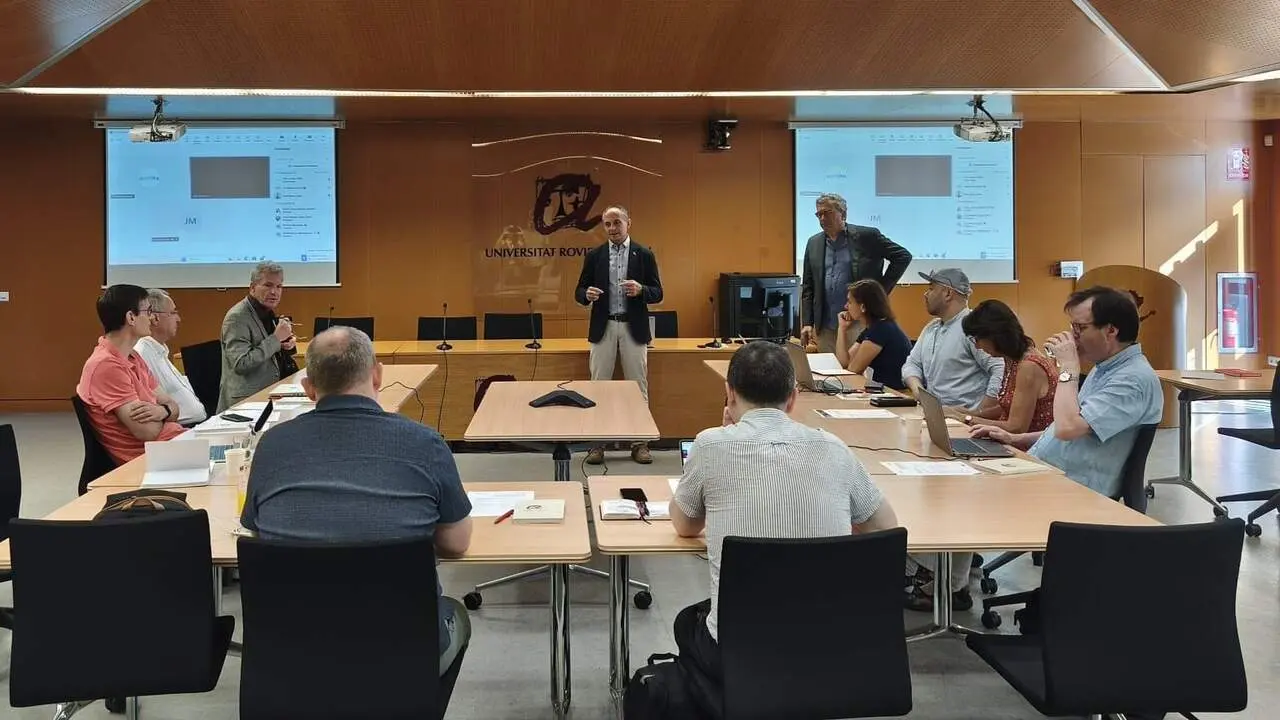
The Rovira i Virgili University (URV) has been responsible for bringing this project to life, recently published in Nature Machine Intelligence. But, how is it possible for a machine to create chemical structures that did not exist before?
How the CoCoGraph system works
Diffusion model adapted to chemistry
The CoCoGraph system uses a technique called diffusion model, which is usually employed to generate images. Here, the process is more complex: it starts from a known molecule, which is dismantled by breaking its bonds, and the program learns to reconstruct it by creating new combinations. This way, plausible molecules are achieved that strictly respect the laws of chemistry.
100% valid molecules
Unlike other systems that may generate impossible structures, CoCoGraph guarantees that each atom maintains the correct number of bonds. This makes 100% of the created molecules chemically valid. Furthermore, the system is faster and requires less computing power than other state-of-the-art models.
The challenge of generating millions of new molecules
An ocean of possibilities
Imagine you have the formula for paracetamol and you try to combine atoms. The number of possibilities is astronomical. It is estimated that the total number of possible molecules reaches up to 1060, far more than the water molecules in all the oceans. But only a few are viable or useful.
Experts confuse real and created molecules
To verify the credibility of the generated molecules, 121 chemistry experts from URV tried to differentiate between real molecules and those generated by CoCoGraph. They were wrong nearly 40% of the time. This means that many AI creations are so convincing that even specialists cannot distinguish them.
Applications and future of the technology
For now, only basic generation
The current system cannot create molecules with specific properties indicated a priori. But it has already been proven that among millions of generated molecules there are variants similar to paracetamol and other compounds with useful characteristics.
Towards custom molecules
The future goal is for AI to design specific molecules that are soluble, non-toxic, and useful for specific applications. This would represent a revolution for chemistry, pharmacology, and materials creation, accelerating discoveries and innovations.
The reality is that, for now, we have only seen the tip of the iceberg. URV’s research shows that the combination of chemistry and artificial intelligence can open a nearly unexplored field, with millions of molecules waiting to be discovered.
Source of the article: Rovira i Virgili University