The 21-day challenge that aims to change the use of Catalan at the URV
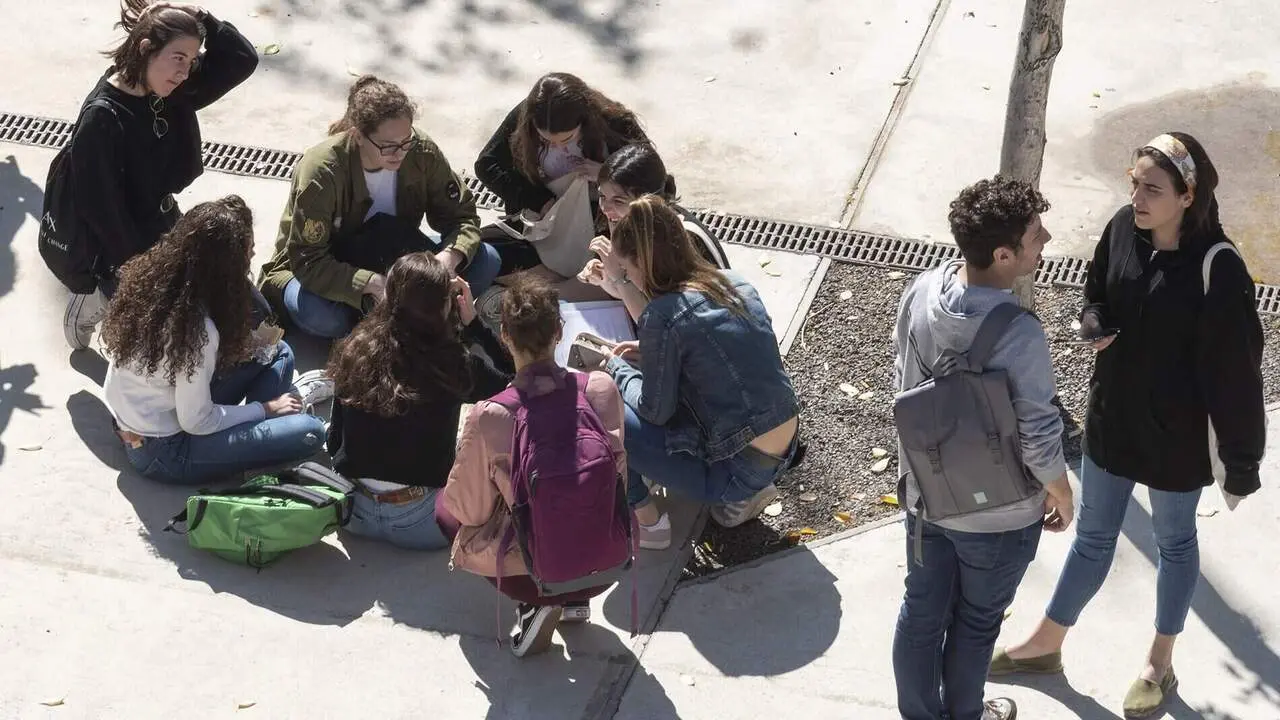

More than 80% of Catalan speakers switch to Spanish in conversation. And this happens even among people who understand and speak Catalan. A habit that makes the language invisible and less present in the public space.
The Rovira i Virgili University (URV) has launched a pioneering program to combat this trend with a 21-day challenge involving students and teaching and administrative staff.
The MantincCat project: a challenge to maintain Catalan
Origin and objectives of the training
In an adverse sociolinguistic context, the URV has promoted MantincCat to confront the norm of convergence to Spanish that dominates conversations in the university environment and beyond. The initiative is part of the 2023-26 Language Policy Plan and aims for the entire university community to adopt habits to increase the oral use of Catalan.
So far, 50 people have participated in five groups, combining students, professors, and administrative staff. The activity is divided into two sessions, with a 21-day challenge between them to put the learnings into practice.
Tools to break the vicious circle
Participants receive training in linguistic assertiveness and on how to change habits from a psychological perspective. For example, starting conversations with "good morning" instead of "hi" to mark the intention of keeping Catalan, as explained by the student Bernat Rubió.
The program also works with cognitive resources to maintain the language even if the interlocutor switches to Spanish. The goal is to break that vicious circle where less presence of Catalan generates a lesser apparent need to speak it.
Experiences within the university community
Students becoming teachers
The initial audience has been students of Education Sciences and Psychology, key since they will be teachers in a few years. Blanca Boxó acknowledged that she used to switch languages without thinking and now applies Catalan even with a child who only hears it at the daycare center.
Guillem Romera detected his own biases, such as switching to Spanish when addressing racialized people in service jobs, but he has learned to maintain Catalan in bilingual conversations.
Teaching staff and multidisciplinary training
Professor Toni Martínez Ballesté, from the Department of Computer Engineering and Mathematics, discovered that it is possible to maintain a conversation in two different languages, as if they were different protocols, thanks to this training.
The URV offers the training to all teaching and administrative staff, and next academic year it will be opened to the entire university community to reinforce the presence of Catalan.
The URV and the commitment to the institutional use of Catalan
The Catalan strengthening plan
Recently, the URV approved a Plan to strengthen Catalan in institutional uses that aims for Catalan to be the default oral language in public service, meetings, and events. MantincCat is one of the key tools to achieve this goal.
The training will be generalized within the plans for administrative and service staff (PTGAS) and teaching staff (PDI), to consolidate the habit of maintaining Catalan in any space.
A shared challenge beyond the campus
The program not only wants to increase the use of Catalan at the university but also aims to influence participants’ daily lives as a shared challenge. Thus, the language remains alive in public and private spaces.
For this reason, the URV is committed to a strategy that reaches the entire university community, raising awareness and providing resources to prevent the norm of convergence to Spanish from imposing itself by inertia.
The 21-day challenge is not just an excess of enthusiasm: it is a real attempt to change habits that, ultimately, define the social use of the language.
We will see if, when it opens to the whole university, the community is willing to withstand this linguistic challenge without yielding to Spanish.
Source of the article: Rovira i Virgili University