


Heritage of the Camp de Tarragona. Stones with memory, cities with a future
Every city is a living memory. Its streets, the ancient facades, the architectural details that have withstood the passage of time are much more than urban scenery: they are a shared identity for all its inhabitants, and form part of the essence, the soul of the city.
The capitals of the Camp de Tarragona, Valls, Tarragona, and Reus have grown upon a dense layer of centuries. Walls, churches, convents, palaces, mansions of wealthy families but also of peasants and artisans, hospitals, service buildings, and factories have been erected, each with its own significance within urban history. But while part of this heritage has been rehabilitated or reused successfully, another part falls into oblivion and, sometimes, literally to the ground, or has been subject to unfortunate rehabilitations or renovations. The conservation of architectural and historical heritage is a matter of the city, identity, and also economy.
“When an old building disappears, we lose not only stone; we lose collective memory.”
Citizen awareness plays an increasingly relevant role. Public opinion does not remain indifferent to unnecessary demolitions or the sustained degradation of an old neighborhood. In Reus, for example, the demolition in 2021 by the City Council of two Noucentisme houses generated a wave of indignation. In Valls, over the past decades, citizens have witnessed helplessly how the Old Quarter loses commerce and inhabitants, while it continues to deteriorate and suffer cyclical collapses. And although diagnoses have been made and projects launched, the reality is that deterioration advances faster than solutions.
Tarragona, with a rich Roman and medieval heritage, has made important strides in protecting its assets, especially since obtaining World Heritage recognition in 2000, although much work remains to be done. The expanded list of assets to be protected in 2008, 2013, and 2021 has been a key step. Reus, on the other hand, has managed to highlight its modernism with a powerful cultural and tourist strategy. But in both cases, there are still elements outside tourist circuits waiting for an opportunity or, at least, urgent restoration.
“A good heritage catalog is like a compass: it guides today’s decisions thinking about tomorrow’s generations.”
The key to progress lies in an active, updated, and operational heritage catalog. It is not enough to have it approved: it must be alive, guiding urban planning decisions, serving as a preventive tool rather than an emergency one. In Valls, the revision of the POUM offered an opportunity to do this work thoroughly, which materialized in the catalog of assets to be protected, definitively approved in 2018. But cataloging is only the first step. The second — equally or more important — is to activate effective rehabilitation policies.
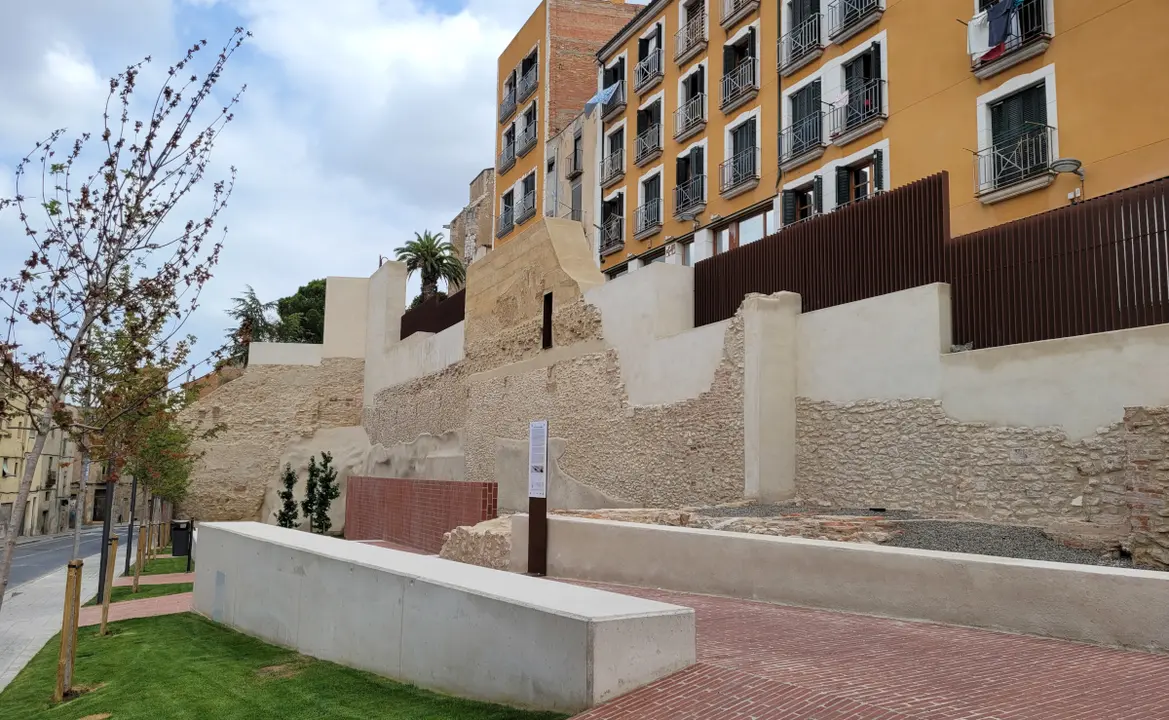
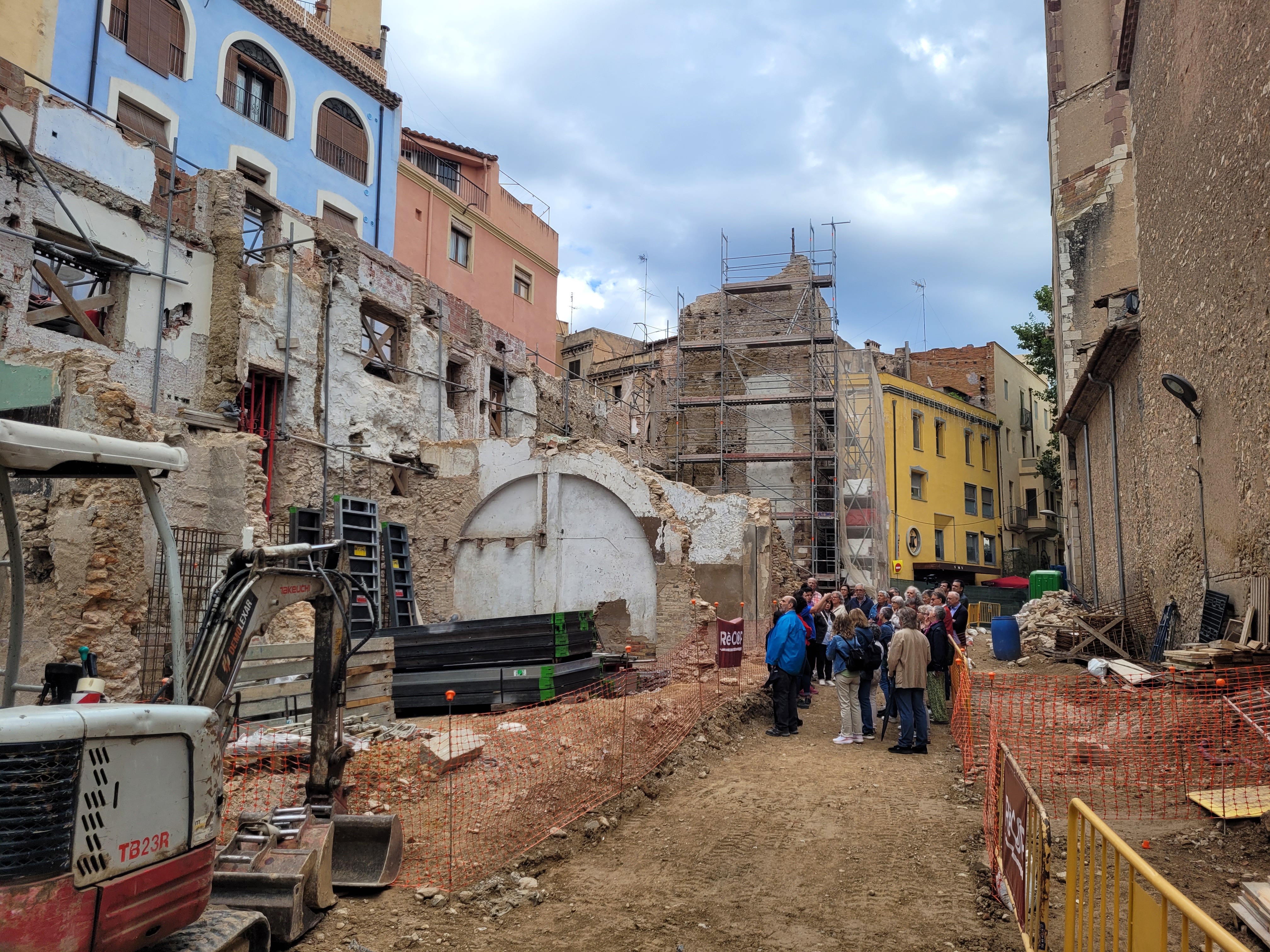
The case of Valls’ Old Quarter is paradigmatic. Shored-up buildings, uninhabited houses, recent collapses, and neighbors who resist with a mix of resignation and affection. Despite constant institutional efforts, the general feeling is that measures come late and poorly. Different municipal projects are recovering spaces and buildings, such as various sections of the 14th-century wall, the old Church of Sant Francesc, or the Ca Padró building. But it is also true that model private initiatives have taken place in this same neighborhood, such as the La Titaranya housing cooperative. What is needed is political determination and continuity in action.
Reus and Tarragona can offer useful lessons: from managing nationally significant cultural assets to incorporating heritage into local revitalization circuits. And beyond the major monuments, attention should also be given to artisans’ houses, decorative details, stone doorways and windows, everything that makes each street a unique space.
“Cities with a future are those that do not reject their past.”
In short, heritage preservation cannot be an optional subject. It is a transversal policy that affects urban planning, culture, housing, and the well-being of residents. And it is also a commitment to the future: because no city can project itself forward if it neglects its past.
Saving the stones that tell us our history is also saving ourselves as a community. We may not be able to recover everything that has been lost, but we can work to conserve, make known, and defend what remains. And do it not out of nostalgia, but out of conviction.