Discover how the Central Market promotes food network collaboration in Reus
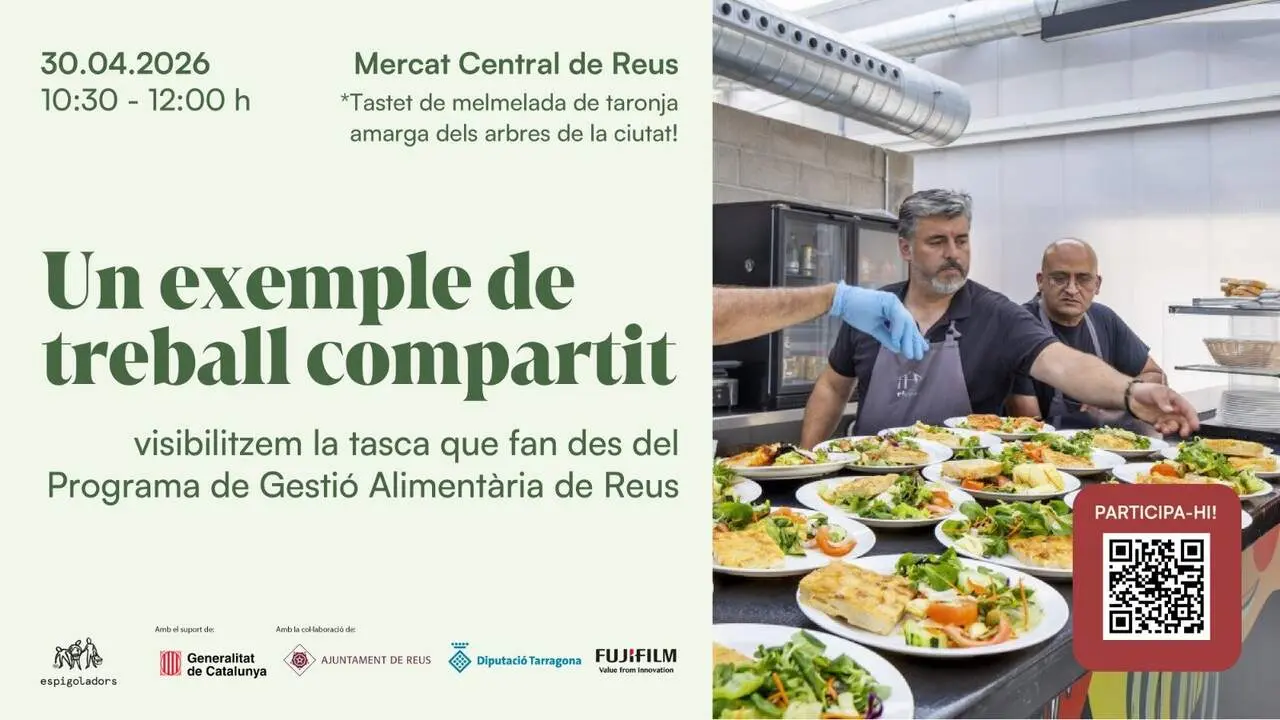

The networked work behind the Food Management Program of Reus is put face-to-face this Thursday at the Central Market. An activity that not only aims to make the process visible, but also explains how the city is moving towards a more sustainable and solidar food model.
The event, scheduled for April 30 from 10:30 to 12:00, is part of the parallel activities of the exhibition "Espigolar per transformar," which can be visited until May 5 inside the Central Market, as detailed by the Reus City Council.
A clear example of shared work in Reus
Organization and collaboration among entities
The activity is organized by Mercats de Reus, the Espigoladors Foundation, Taller Baix Camp, Red Cross, and the Sant Bernat Calbó Parish. All these entities, together with the City Council, work in coordination to combat food waste in the city.
The program brings together professionals and social organizations involved in ensuring that food is not lost and is redistributed solidarily. This allows local actions to have a direct impact on social cohesion and sustainability.
An open activity to learn and participate
Thursday’s event is not only to show, but also to share experiences and initiatives that promote food use. Anyone interested can attend, although prior registration on the Espigoladors website is recommended.
This proposal shows how a well-coordinated network of work can generate a more responsible and solidar food model, a goal that increasingly concerns the public.
The exhibition "Espigolar per transformar," a cry against waste
Reflections on the food system
Until May 5, the Central Market hosts the exhibition "Espigolar per transformar," an initiative of the Espigoladors Foundation with support from the Generalitat and the Tarragona Provincial Council. The exhibition invites us to face food waste, both in agricultural production and final consumption.
The exhibition highlights the key role of farming and warns about the massive loss of food in the fields, a part often invisible but crucial to the food system.
Free entry and adapted hours
The exhibition is free and can be visited during the Central Market’s usual hours: Monday, Tuesday, Wednesday, and Saturday from 8:00 to 15:30, and Thursday and Friday from 8:00 to 20:00. An opportunity to better understand the causes and possible solutions to waste.
It is the perfect setting to complement the networked work activity presented on Thursday, reinforcing the message and raising public awareness.
Reus, a reference in food use and sustainability
The role of the El Roser Social Center
The El Roser Social Center, dependent on the Area of Services to People and Social Rights, has become a model to follow in food use and urban sustainability. This center has been working for years with the Espigoladors Foundation and other local entities to reduce waste.
Its Food Management Program and participation in the Urban(eat)a – Edible Cities project are a clear example of how the city engages in responsible practices.
Data and specific impacts in the city
Last year, 3,775 kg of fruits from urban trees, such as olives, carobs, and bitter oranges, were collected thanks to gleaning actions involving the public.
This food has helped supply the Roser social dining room with 200 liters of extra virgin olive oil and make 1,500 jars of jam in the social workshop of the brand es im-perfect®. The community dimension is reinforced with more than 65 people involved, including social service users and volunteers.
For more information, you can consult the El Roser Social Center website.
If you thought leftover food only ends up in the trash, now you know who is behind it and how it is transformed into real support for the community.
Source of the article: Reus City Council